




Insulated sectional doors use double-skinned panels with an insulating core to slow heat transfer across a warehouse doorway, giving steadier indoor temperature, less HVAC load and a more comfortable workplace near the opening. Foam-core panels and tight perimeter sealing reduce the air exchange that turns an open doorway into a hole in the building envelope.
Quick Summary
- Insulation only performs as well as its installation, so gaps at the perimeter seal or a poorly fitted track undermine the panel.
- Insulated sectional doors suit moderate traffic, security and appearance, and need overhead clearance.
- Insulated rapid roller doors suit high-frequency industrial traffic and are compact and space saving.
- For high-use coolroom and freezer doorways, the Movichill insulated rapid roller door is engineered for rapid cycles.
- Planned warehouse door maintenance keeps seals and panels performing.
Table of Contents
- What Insulated Sectional Doors Do for Warehouse Temperature Control
- Cold Storage Door Solutions: Insulation That Protects Product and Energy
- Insulated Rapid Roller Doors vs Sectional Doors: Which Suits Your Opening?
- Frequently Asked Questions
What Insulated Sectional Doors Do for Warehouse Temperature Control
Insulated sectional doors use double-skinned panels with an insulating core to slow heat transfer across a warehouse doorway, giving steadier indoor temperature, less HVAC load and a more comfortable workplace near the opening. To see the insulated door range and the options available, review the panels, cores and sealing details. Every time a single-skin door opens, the doorway becomes a hole in the building envelope; foam-core panels and tight perimeter sealing reduce that exchange. (Source: energy efficiency guidance)
Cold Storage Door Solutions: Insulation That Protects Product and Energy
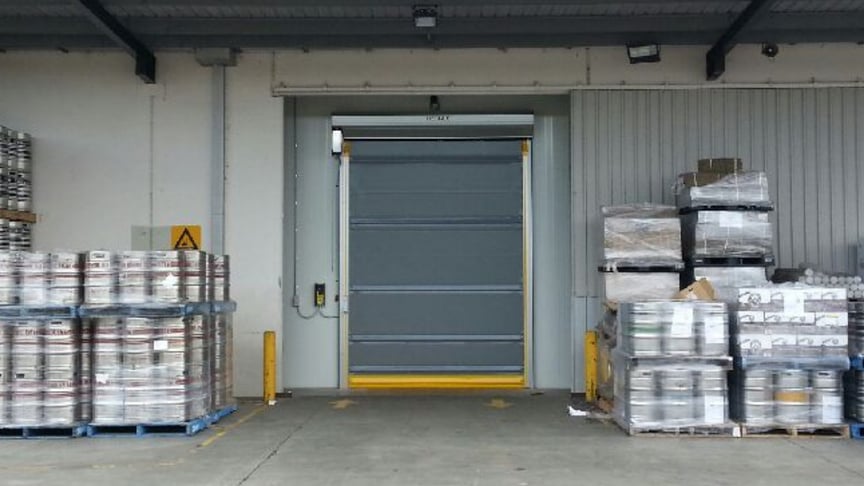
Cold storage raises the stakes: a coolroom or freezer doorway is where product integrity and energy expenses meet. Insulated panels and effective weather sealing can help limit air exchange at the threshold, which supports temperature stability for stored goods. For high-use coolroom and freezer doorways, our Movichill insulated rapid roller door is engineered for rapid cycles, while our broader coolroom door solutions cover customisable, energy-saving options. Insulation only performs as well as its installation: gaps at the perimeter seal or a poorly fitted track undermine the panel, so commissioning deserves as much attention as specification.
Insulated Rapid Roller Doors vs Sectional Doors: Which Suits Your Opening?
The right choice depends on traffic volume, ceiling space and cycle frequency. Neither format wins everywhere.
| Factor | Insulated Enturi Sectional Door | Insulated sectional door | Insulated rapid roller door |
|---|---|---|---|
| Best for | Moderate traffic, security, appearance | Moderate traffic, security, appearance | High-frequency industrial traffic |
| Space | Minimal Overhed Clearance | Needs overhead clearance | Compact, space saving |
| Typical setting | Commercial, showroom, workshop | Commercial, showroom, workshop | Warehouse, cold chain, production |
| Insulation (U-value, lower is better) | 40mm insulated panel, approx. U 0.76 W/m²K (panel) | 40mm panel, typically U 0.5–0.8 W/m²K (panel); approx. 1.0–1.4 W/m²K for the whole door | Best-in-class rigid insulated: approx. 1.3 W/m²K (whole door) |
For constant forklift traffic, explore our rapid roller doors range. For a sectional solution, the insulated compact sectional door lets you check models and specifications. Either way, planned warehouse door maintenance keeps seals and panels performing.
Forklifts queuing at a doorway, temperature drifting near the opening and maintenance eating into production time are doorway problems with doorway fixes. Remax Doors manufactures Australian-made industrial and commercial door systems, including Movidor rapid roller doors with a self-repairing crash relocation system and insulated options for cold chain sites, backed by nationwide service and preventative maintenance support. Specify a doorway that holds its temperature and keeps your operation moving.
Frequently Asked Questions
What are the benefits of insulated sectional doors in a warehouse?
Insulated sectional doors can help reduce heat transfer through the door opening, which supports more stable warehouse temperature control. Their panels and perimeter seals also help limit air exchange. Suitability depends on traffic frequency, opening size and your temperature requirements.
Are insulated sectional doors suitable for cold storage?
They can be, but cold storage door solutions often favour insulated rapid roller doors for high-use freezers and coolrooms where fast cycle times matter. Sectional doors suit openings where a tight seal, security and space saving are priorities and traffic is moderate. For busy cold chain doorways, discuss cycle frequency and temperature zones with a supplier before choosing. The right door depends on how often it opens, the temperature difference and your hygiene requirements.
How should insulated sectional doors be maintained?
Planned preventative maintenance is one way to check seals and moving parts before wear affects performance. Remax offers preventative maintenance and service for planned upkeep.
Last Updated: November 15, 2026