



A cold-room doorway can be one of the largest sources of temperature loss in a facility. Every opening admits warmer, moisture-laden air, adds load to refrigeration equipment and can create ice, condensation and hygiene issues around the threshold. The best doors for cold storage are therefore not simply insulated panels. They are engineered access systems matched to room temperature, traffic volume, hygiene requirements and the way people, pallets and equipment move through the opening.
For food processing, distribution, pharmaceutical and controlled-environment sites, choosing the wrong door can lead to higher energy use, damaged product, avoidable maintenance and disruption at a critical point in the operation. The right specification protects the cold chain while allowing staff and goods to move without unnecessary delay.
What cold storage doors need to do
Cold storage doors work harder than standard commercial doors. They must maintain a reliable thermal seal while coping with frequent impacts, wash-down procedures, pressure differences and repeated opening cycles. In freezer applications, they must also manage the effects of moisture freezing around seals, tracks and floor interfaces.
The required door is determined by more than the room set point. A low-traffic freezer accessed a few times a day has different needs from a chilled dispatch area with forklifts passing through every few minutes. Door type, insulation, opening speed, sealing arrangement and activation method should be considered as one operating system.
A sound specification starts with practical questions: Is the opening between ambient and chilled space, chilled and freezer space, or two areas at similar temperatures? What traffic uses it? Is the area subject to wash-down? Does the door need to provide security outside operating hours? These details determine whether a single insulated door is sufficient or whether the opening needs a combination of barriers.
Best doors for cold storage by application
Insulated sliding doors for cold rooms and freezers
Insulated sliding doors are a strong choice for cold rooms, freezer rooms and large storage openings where thermal performance is the priority. Their insulated leaf, perimeter seals and positive closing action help limit heat transfer between spaces. Sliding configurations also avoid the clearance required by a large swing leaf, which can be useful in tight loading or storage areas.
For freezer use, the detail around the frame and threshold matters as much as the door leaf. Heated frames, heater cables or appropriate thermal breaks may be needed to reduce frost build-up and prevent seals from freezing to the frame. The correct arrangement depends on the room temperature, moisture exposure and local operating conditions.
Sliding doors suit openings that remain closed for longer periods and are opened for pallet movements or scheduled access. They are generally less suitable where constant pedestrian traffic causes the door to be left open. In that situation, faster internal barriers should be considered alongside the main insulated door.
Insulated swing doors for personnel and moderate traffic
Insulated swing doors are commonly used for personnel access, trolley traffic and smaller cold-room openings. They can provide effective temperature separation in a compact, familiar format, particularly where users need to pass through quickly without waiting for a powered door cycle.
The key is selecting a door built for the likely impact and frequency of use. In high-use areas, hinges, seals, vision panels and kick plates must withstand daily contact from trolleys, bins and pallet jacks. A poorly specified swing door often fails first at the hardware and sealing points, allowing gaps that reduce thermal performance long before the panel itself appears worn.
For hygienic facilities, smooth, non-porous finishes and corrosion-resistant components are equally important. Food production sites should avoid door details that trap debris or are difficult to clean. Where wash-down is routine, the full assembly - including frame, hardware and fixings - needs to suit the cleaning regime.
Rapid roller doors for busy chilled dispatch areas
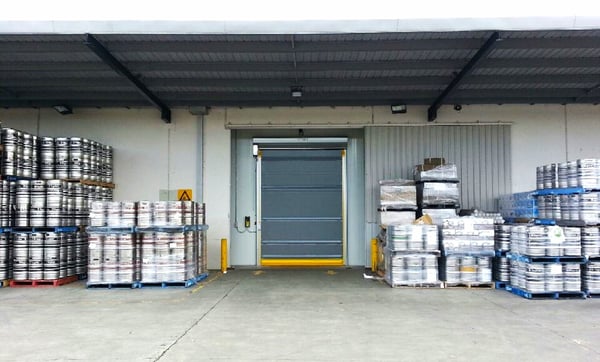
Where traffic is frequent, door opening time is often the biggest contributor to energy loss. Rapid roller doors can reduce the time an opening is exposed compared with conventional manually operated doors. They are particularly effective at transitions between ambient and chilled areas, dispatch zones, production areas and cool rooms with high forklift activity.
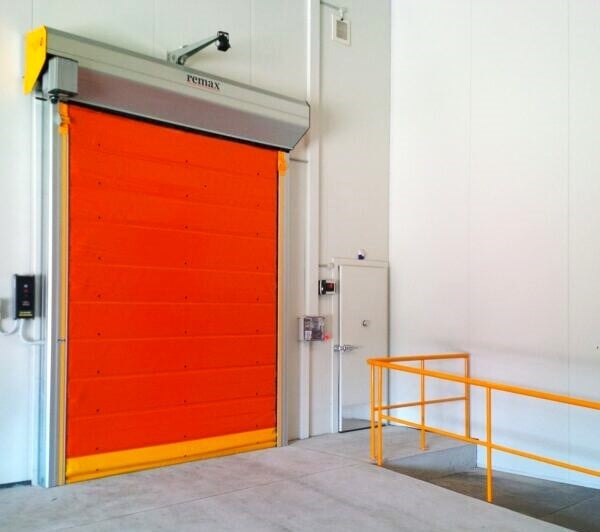
A rapid door is not automatically a freezer door. Standard fabric systems provide limited insulation, so they are usually specified to manage air exchange and traffic flow rather than as the primary barrier for a deep-freeze room. Insulated high-speed systems are available for more demanding temperature separation, but the appropriate option depends on temperature differential, opening size and cycle rate.
Activation should support the actual traffic pattern. Motion sensors, pull cords, push buttons, induction loops and access controls all have a place, but a door that opens too early or remains open too long wastes energy. Sensor placement and hold-open timing need to be commissioned carefully, not treated as an afterthought.
PVC strip curtains as a secondary thermal barrier
PVC strip curtains are a practical secondary barrier for chilled spaces with regular traffic. They reduce the direct movement of warm air when a main door is open and allow forklifts and pedestrians to pass without a complete opening cycle. They can also help contain dust and reduce draughts in appropriate applications.
They do have limits. Strip curtains are not a substitute for an insulated, properly sealed door where temperature control or security is critical. Strips can become torn, cloudy or misaligned in heavy traffic, reducing visibility and effectiveness. In freezer environments, material selection must account for low-temperature flexibility. Routine inspection and replacement are necessary to keep the opening safe and functional.
Specify the opening, not just the door
The most effective cold storage solution often combines door types. A freezer may require an insulated sliding door as its secure, thermally efficient primary closure, with a rapid door or strip curtain managing frequent internal traffic. A busy chilled dispatch opening may use a rapid roller door for daily movement and a sectional or sliding door for after-hours security.
When reviewing options, assess these operational factors together:
- Temperature differential and required room conditions
- Daily opening cycles, traffic type and opening dimensions
- Hygiene, wash-down and corrosion exposure
- Safety requirements, including visibility and impact resistance
- Security needs when the facility is unattended
- Service access, replacement parts and planned maintenance requirements
This approach prevents a common error: selecting the highest insulation value on paper while overlooking how the opening is used. A highly insulated door left open for extended periods will not protect the cold chain. Conversely, a fast door with inadequate sealing may struggle in a low-temperature room even if it improves traffic flow.
Installation details affect thermal performance
Cold storage doors need accurate installation to perform as specified. Uneven floors, misaligned frames, poor threshold transitions and damaged seals all create paths for air leakage. At freezer openings, small defects can quickly become visible as frost, ice and difficult door operation.
The interface with surrounding insulated panels, refrigeration services and floor construction should be resolved before installation. This is particularly important on refurbishment projects, where an existing opening may not have the structural support, clearances or thermal detailing required for a new door system.
Commissioning should include adjustment of closing forces, seals, safety devices and activation settings. It should also confirm that the door closes fully after normal traffic use. A door that is technically operational but routinely held open by traffic patterns is not delivering temperature control.
Plan for maintenance in high-use environments
Cold storage is unforgiving on moving components. Condensation, low temperatures, impacts and high cycles can affect rollers, hinges, tracks, seals, motors and sensors. Planned maintenance identifies wear before a seal failure or mechanical fault causes a room to be taken out of service.
Maintenance should focus on function, not just appearance. Technicians should check sealing pressure, door alignment, hardware condition, safety systems, frost accumulation and the performance of any heated components. Facilities should also keep common damage items, such as replacement strips or seals, within a practical repair plan where operational risk justifies it.
Remax Doors supports cold storage operators with engineered door solutions, installation and ongoing service because the useful life of a doorway depends on how it is maintained after handover.
The right cold storage door is the one that stays closed, seals correctly and keeps traffic moving under real operating conditions. Start with the temperature boundary and traffic pattern, then specify the door system and service plan around the work your facility performs every day.