



A washdown doorway is exposed to far more than water. It may face high-pressure cleaning, chemical sanitisers, temperature cycling, trolley impact, forklift traffic and repeated opening throughout every shift. Selecting the best washdown door materials is therefore a facility-performance decision, not simply a finish selection. The wrong material can corrode, absorb moisture, harbour contaminants or require frequent repair - all of which affects hygiene, uptime and operating cost.
For food processing, cold storage, pharmaceutical, healthcare and other controlled environments, the door leaf, frame, seals, hardware and installation details must work together. The most suitable option depends on the cleaning regime, traffic type, temperature differential and level of physical abuse expected at the opening.
Best washdown door materials by application
There is no single material that suits every washdown area. A personnel door at the entrance to a dry packaging room has different requirements from a high-traffic opening between a raw processing area and a chilled production zone. Specifiers should begin with the environment, then select the material and door configuration that will maintain performance under those conditions.
Stainless steel for intensive hygiene and corrosion resistance
Stainless steel is a leading choice where hygiene, durability and chemical resistance are non-negotiable. It provides a smooth, non-porous surface that is straightforward to clean and does not absorb moisture, odours or residues. For facilities using frequent washdowns, stainless steel also offers strong resistance to corrosion when the grade is matched to the cleaning chemicals and surrounding environment.
Grade 304 stainless steel is widely used for internal food, beverage and healthcare applications. Where chloride exposure, saline conditions or aggressive chemical cleaning are present, grade 316 may be the better specification. This is particularly relevant in seafood processing, coastal locations and areas where cleaning chemistry is more demanding.
A stainless-steel swing or sliding door is well suited to processing rooms, wash bays, commercial kitchens, abattoirs and clean manufacturing spaces. It withstands repeated use and presents a professional, hygienic finish. However, stainless steel is not immune to damage. Thin skins can dent under trolley impact, and poorly detailed joins, fasteners or hardware can become corrosion points. Door construction, reinforcement and drainage details matter as much as the visible surface.
High-density polyethylene for impact-prone washdown areas
High-density polyethylene, often referred to as HDPE, is a practical choice where washdown requirements meet frequent impact. The material is non-porous, moisture resistant and highly tolerant of knocks from trolleys, pallets and bins. Unlike painted metal, its colour runs through the material, so minor surface scuffs are less visually obvious and do not expose a coating that can peel or corrode.
HDPE is commonly used in swing doors serving food preparation, production and back-of-house areas. It is particularly useful where staff, carts and material-handling equipment regularly pass through the opening. The door can flex slightly under impact and return to position, reducing damage that might otherwise lead to a repair call-out.
The trade-off is that polyethylene does not provide the same rigid, premium metallic finish as stainless steel, and its temperature capability should be checked for cold-room or high-heat applications. It may also require appropriate internal reinforcement and heavy-duty hinges to prevent long-term sagging in wide or high-use doors. In the right setting, however, it offers excellent lifecycle value because it combines cleanability with impact resistance.
Fibreglass reinforced plastic for wet and corrosive environments
Fibreglass reinforced plastic, or FRP, performs well in wet areas where corrosion resistance is the main concern. It is lightweight, does not rust and can tolerate many cleaning conditions. FRP door leaves are often installed in amenities, plant rooms, chemical processing areas and some food-production environments where a durable moisture-resistant barrier is needed.
Its performance depends heavily on the quality of the outer gel coat, edge sealing and internal core. A damaged surface can be harder to restore than stainless steel or polyethylene, particularly if moisture reaches the core. FRP is also less suitable where sustained high-impact traffic is expected unless the door is specifically engineered with impact protection.
For lower-to-medium traffic washdown locations, FRP can be a cost-effective option. It is best selected with clear information about chemical exposure, washdown pressure and likely impact loads rather than as a generic substitute for stainless steel.
Material selection is only part of washdown door performance
The door leaf material receives most of the attention, yet many washdown failures begin at the edges, seals and hardware. Water ingress around an unsealed perimeter can compromise insulation cores, corrode fixings and create hygiene concerns behind the visible face of the door.
Frames should be selected for the wet environment. Stainless-steel frames are often preferred in intensive hygiene areas because they resist corrosion and are easy to clean. Where insulated doors are required, thermal breaks and correctly fitted perimeter seals help prevent condensation and energy loss. Bottom seals need to maintain contact with the floor while tolerating regular movement and cleaning.
Hinges, tracks, rollers, handles and fixings must also be washdown-rated. Standard mild-steel hardware may perform adequately in a dry warehouse but fail quickly in a wet processing room. Specify corrosion-resistant hardware, protected bearings and designs that do not create unnecessary dirt traps. Where possible, choose smooth surfaces, sealed joints and accessible components that allow cleaning crews to inspect the full opening.
Match the door to traffic, temperature and cleaning practice
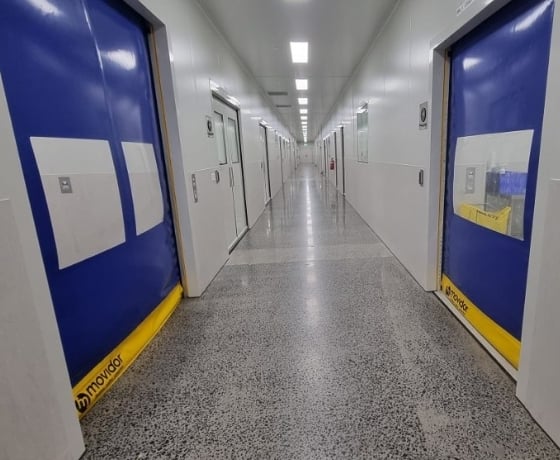
A high-use doorway needs more than a material that survives water exposure. It must open reliably at the speed required by the operation and protect the environment on each side. For example, an insulated stainless-steel sliding door may be appropriate for a cold room requiring strong thermal separation, while an impact-resistant polyethylene swing door may better suit a busy processing corridor.
Traffic patterns should guide the decision. Personnel-only access, trolley traffic, pallet jacks and forklifts place very different loads on a door. Installing a light-duty door in a materials-handling route often creates avoidable downtime, while over-specifying a low-use opening can add cost without a meaningful operational gain.
Cleaning procedures also need to be assessed. Consider the water pressure, water temperature, chemical type, cleaning frequency and whether the door will be exposed to direct spray or only occasional washdown. A material that performs well with mild detergent may deteriorate under repeated exposure to aggressive alkaline or chloride-based chemicals.
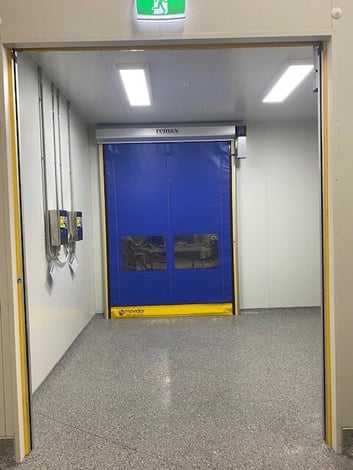
Temperature is equally significant. Chilled and frozen environments require materials, seals and hardware that remain stable through thermal cycling. Insulated construction, vapour control and correct installation reduce the risk of condensation, ice build-up and energy leakage around the opening.
Specify for lifecycle cost, not purchase price
The lowest initial price can be expensive when a door requires repeated repairs, causes cold-air loss or creates a hygiene risk. A well-specified washdown door should provide a cleanable surface, withstand expected traffic and remain serviceable when components eventually wear.
This is where local engineering, correct installation and planned maintenance make a material choice deliver its intended value. Door alignment, hinge adjustment, seal condition and hardware wear should be inspected before minor deterioration becomes a production interruption. Remax Doors supports specialised applications with purpose-built door systems and ongoing service programs designed around demanding Australian facilities.
The best material is the one that continues to protect the opening after thousands of cycles and hundreds of cleaning shifts. Start with the real conditions at the doorway, then specify the complete system - leaf, frame, seals, hardware and service access - to keep hygiene, traffic flow and uptime working together.