




A strong HACCP plan is essential to food safety. But when an auditor arrives at your facility, they won’t spend the entire visit looking at paperwork.
They’ll walk the floor. They’ll look at how different hygiene zones are separated. They’ll inspect doors, seals and openings. They’ll look for standing water, damaged surfaces, pest entry points and areas that are difficult to clean.
And what they find can have a significant impact on your audit. For food and beverage facility managers, that raises an important question: Does your facility make food safety easier to maintain, or harder?
What does HACCP mean for a food facility?
HACCP stands for Hazard Analysis and Critical Control Point. It is an internationally recognised approach to identifying, evaluating and controlling food safety hazards.
In Australia, HACCP principles form part of the broader food safety framework, with certain businesses required to operate documented food safety programs based on HACCP principles.
It’s important, however, to understand the distinction between a HACCP system and the building it operates within.
Strictly speaking, a building itself isn't “HACCP compliant”. HACCP is a methodology applied to processes and food safety management systems. But the design, condition and maintenance of a facility can either support that food safety system or undermine it. That’s why facility design matters.
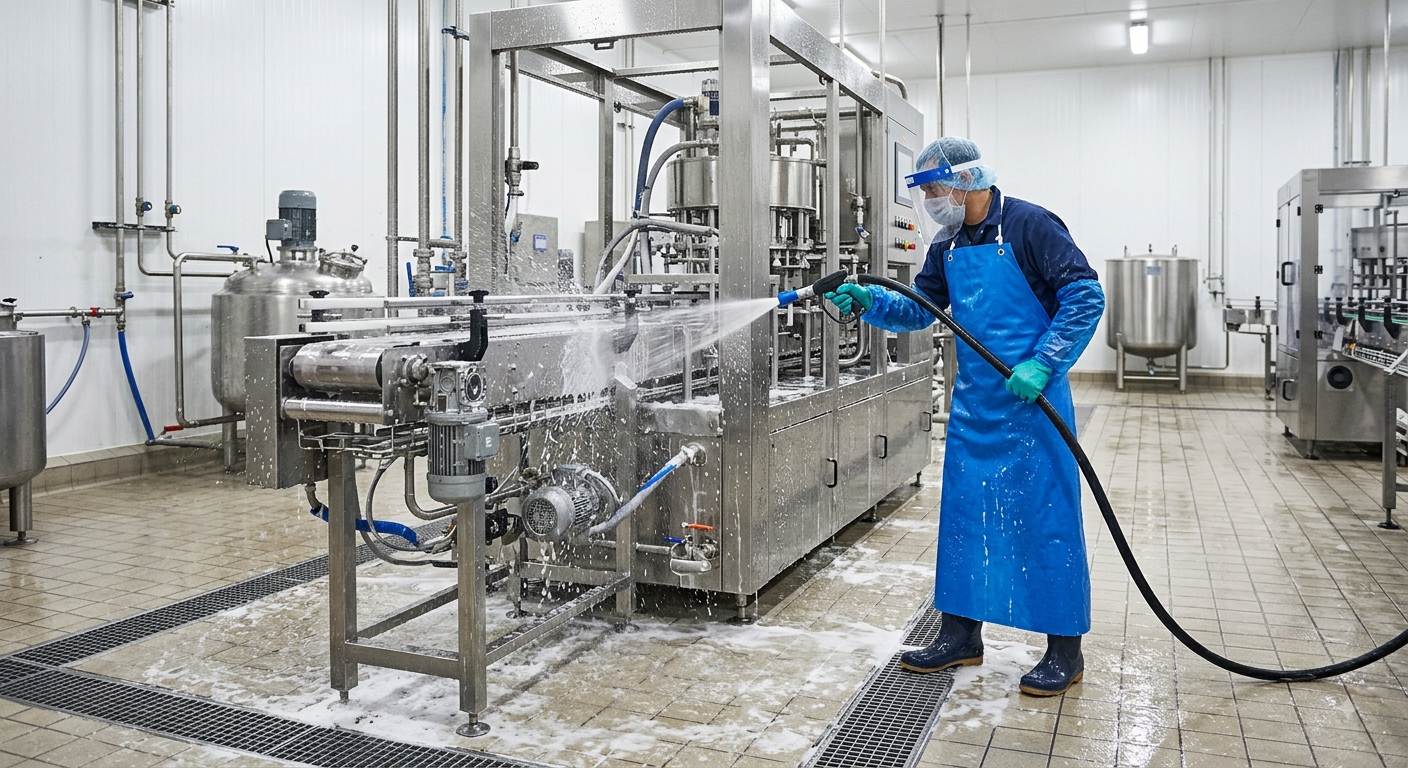
Food safety goes beyond the production line
A well-designed food facility should make it easier to consistently control contamination risks.
Three areas are particularly important:
1. Flow and zoning
-
Raw materials, work-in-progress, finished products, packaging, waste and people all move through a food facility. Those movements need to be carefully considered.
-
High-care and low-care areas should be appropriately separated, while the movement of people and products should be controlled to minimise opportunities for cross-contamination.
-
Physical barriers such as walls, doorways, vestibules and airlocks can all play a role in maintaining this separation.
2. Controlled boundaries
Every opening between one area and another is a potential point of risk. Doors, dock seals, personnel access points, drains and other openings need to be appropriate for the environment and maintained in good condition.
A seemingly minor issue, such as a damaged door seal, can create a pathway for pests or compromise the separation between hygiene zones.
3. Cleanability and durability
Food and beverage facilities can be demanding environments.
Surfaces and equipment may be exposed to high-pressure wash-down, cleaning chemicals, temperature changes, forklift impacts and constant traffic. Materials therefore need to be selected for the conditions they will actually face.
A solution that looks suitable on installation day may become a food safety concern if it deteriorates after repeated cleaning or impact.
What are auditors looking for?
An audit isn't simply about whether the facility looks clean on the day. Auditors are looking for evidence that the facility can remain clean, controlled and appropriately maintained over time.
Common infrastructure problems can include:
- Doors that don't close or seal correctly
- Damaged or missing strip curtains
- Gaps that allow pest entry
- Standing water and poor drainage
- Damaged walls, floors or junctions
- Condensation around temperature-controlled areas
- Poor separation between hygiene zones
- Surfaces or components that cannot withstand the required cleaning regime
- Damage that has not been repaired or properly documented
Individually, some of these issues may appear relatively minor. Together, they can tell an auditor a much bigger story about how effectively environmental risks are being controlled.
.jpg?width=1200&height=627&name=EDMP1%20(7).jpg)
Doors can be a critical part of the equation
Doors work hard in food and beverage facilities. They may need to separate hygiene zones, control temperature, withstand frequent wash-down, prevent pest entry and open and close hundreds or thousands of times during production.
They may also have to survive the occasional forklift impact. That means choosing a door based simply on its dimensions or upfront cost can overlook some important questions.
When specifying a door or barrier, consider:
How will it be cleaned?
Surfaces, frames, guides, headboxes, motors and controls may all need to withstand the site's wash-down regime.
How well does it seal?
Gaps around a doorway can compromise pest control, temperature management and environmental separation.
How frequently will it operate?
High-traffic openings may benefit from rapid-action doors that minimise the amount of time the doorway remains open.
What happens when it gets hit?
In forklift environments, impact is a practical reality. A door that can recover quickly from an impact can reduce downtime and the time an opening remains compromised.
Does it need to control temperature?
Chilled and frozen environments require careful consideration of insulation, condensation and thermal performance.
How quickly can it be maintained?
A damaged door that cannot be repaired promptly can become an ongoing operational and compliance problem.
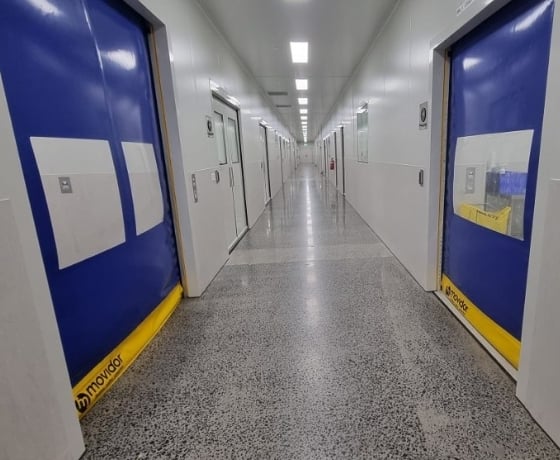
Don't wait for an audit to find the problem
One of the most valuable times to address food safety risks is before the facility is built or refurbished. Changing the position or specification of a doorway on a drawing is relatively simple. Discovering the same problem after construction can mean modifications, production disruption and additional expense.
The same principle applies to existing facilities.
Regularly reviewing doors, seals, surfaces, drainage and other infrastructure can help facility managers identify deterioration before it develops into a larger problem.
How audit-ready is your facility?
Food safety isn't only about having the right procedures. The physical environment needs to support those procedures every shift, every wash-down and every production cycle.
For facility managers, project teams and specifiers, that means looking beyond the HACCP plan and asking whether the building itself is helping control risk.
We've developed a practical whitepaper to help: Beyond the HACCP Plan: Food Safety & the Facility Behind the Process explores common audit pitfalls, hygienic facility design, product and material selection, doors and barriers, and the role infrastructure plays in keeping food and beverage facilities audit-ready.
It also includes a practical audit-ready facility specification checklist for new builds, retrofits and existing sites. Download the Free Whitepaper below.
Designing or upgrading a food facility?
Remax Doors has been engineering and manufacturing doorway and barrier solutions for Australian food and beverage facilities for more than 25 years.
Our team can help you consider the right doorway solution for your hygiene zone, cleaning regime, temperature requirements, traffic levels and operating environment.
Talk to Remax Doors about your facility → Contact Us.