




Door automation improves safety, traffic flow and environmental control in high-use facilities when doors, sensors and service plans are properly specified.
A pallet truck waiting at a closed doorway can hold up a despatch run. A door left open in a cool room can compromise temperature control within minutes. At a hospital, a manually operated door can create a hygiene and access issue at the same time. Door automation addresses these operational pressure points, but only when the complete doorway system is designed for the traffic, environment and risk level of the facility.
For industrial and commercial sites, an automated door is not simply a door with a motor. It is a coordinated system of door leaf or curtain, drive unit, controls, safety devices, activation method, structural fixing and maintenance plan. A poor match between any of these elements can create nuisance stoppages, safety exposure and costly disruption.
What door automation needs to achieve
The correct automation solution starts with the job the opening performs. In a warehouse, the priority may be keeping forklifts moving without compromising security. In food processing, the door may need to limit air exchange, support wash-down procedures and avoid harbouring contaminants. In healthcare, controlled access, touch-free operation and reliable opening cycles may be the deciding factors.
Speed is often a major consideration, but it should not be assessed in isolation. A rapid door that opens quickly but is frequently damaged by vehicle impact will not improve productivity. Likewise, a heavily insulated sectional door may offer excellent thermal performance, yet be unsuitable for an opening with constant forklift traffic if its operating cycle and activation arrangement are not appropriate.
A well-specified automated opening should balance four connected outcomes: safe movement of people and vehicles, reliable traffic flow, environmental control and secure closure. The balance changes from site to site. That is why doorway automation should be considered during facility planning, not added as an afterthought once operational issues emerge.
Matching automated doors to the application
Different door types respond to different operating conditions. The most effective choice is based on the opening size, daily cycles, traffic type, required opening speed, environmental separation and security level.
Rapid roller doors for frequent traffic
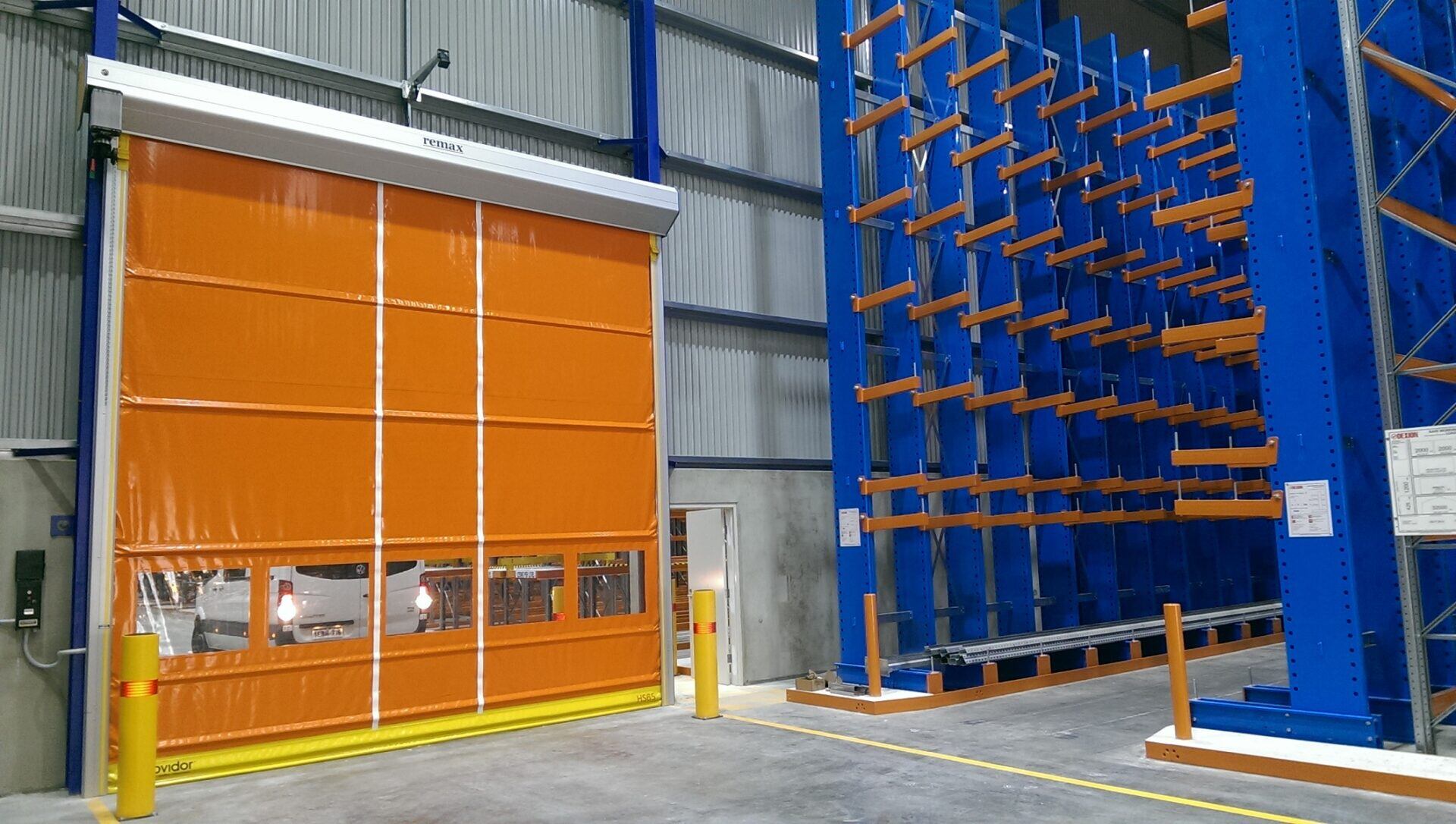
Rapid roller doors suit high-cycle internal and external openings where forklifts, pallet jacks or staff move continually between zones. Their speed can reduce waiting time and limit the period an opening is exposed to dust, insects, heat or cold. In temperature-controlled areas, the faster close cycle can help reduce energy loss when paired with a suitable seal and control strategy.
The operating environment matters. A door in a dry distribution warehouse has different requirements from one near wash-down areas, food production lines or corrosive coastal conditions. Curtain material, side guides, motor protection and control enclosure ratings should be selected accordingly. For busy forklift routes, impact tolerance and a practical reset process can be as valuable as maximum opening speed.
Sectional doors for security and thermal performance
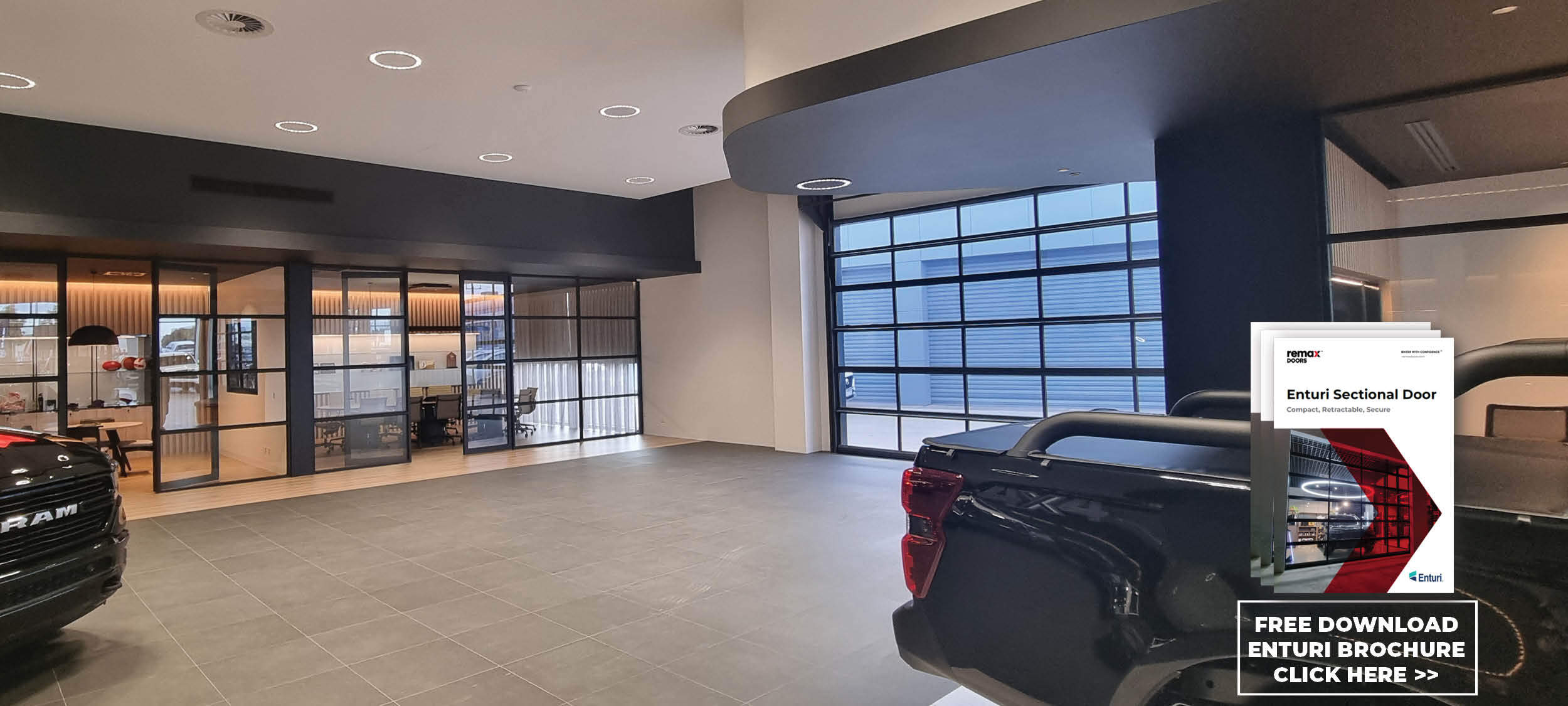
Automated sectional doors are commonly used for loading docks, service bays and industrial buildings requiring a secure, insulated external closure. They can be configured with windows, ventilation options and controls suited to vehicle access. Their suitability depends on headroom, track arrangement, wind exposure and the available space above and around the opening.
Where vehicle movements are intermittent rather than continuous, a sectional door may offer better long-term value than a rapid door. The key is to specify an operator rated for the expected duty cycle and to protect the opening from avoidable impact. Dock layouts, vehicle approach paths and driver sightlines all affect the door's service life.
Automated swing and sliding doors for controlled access
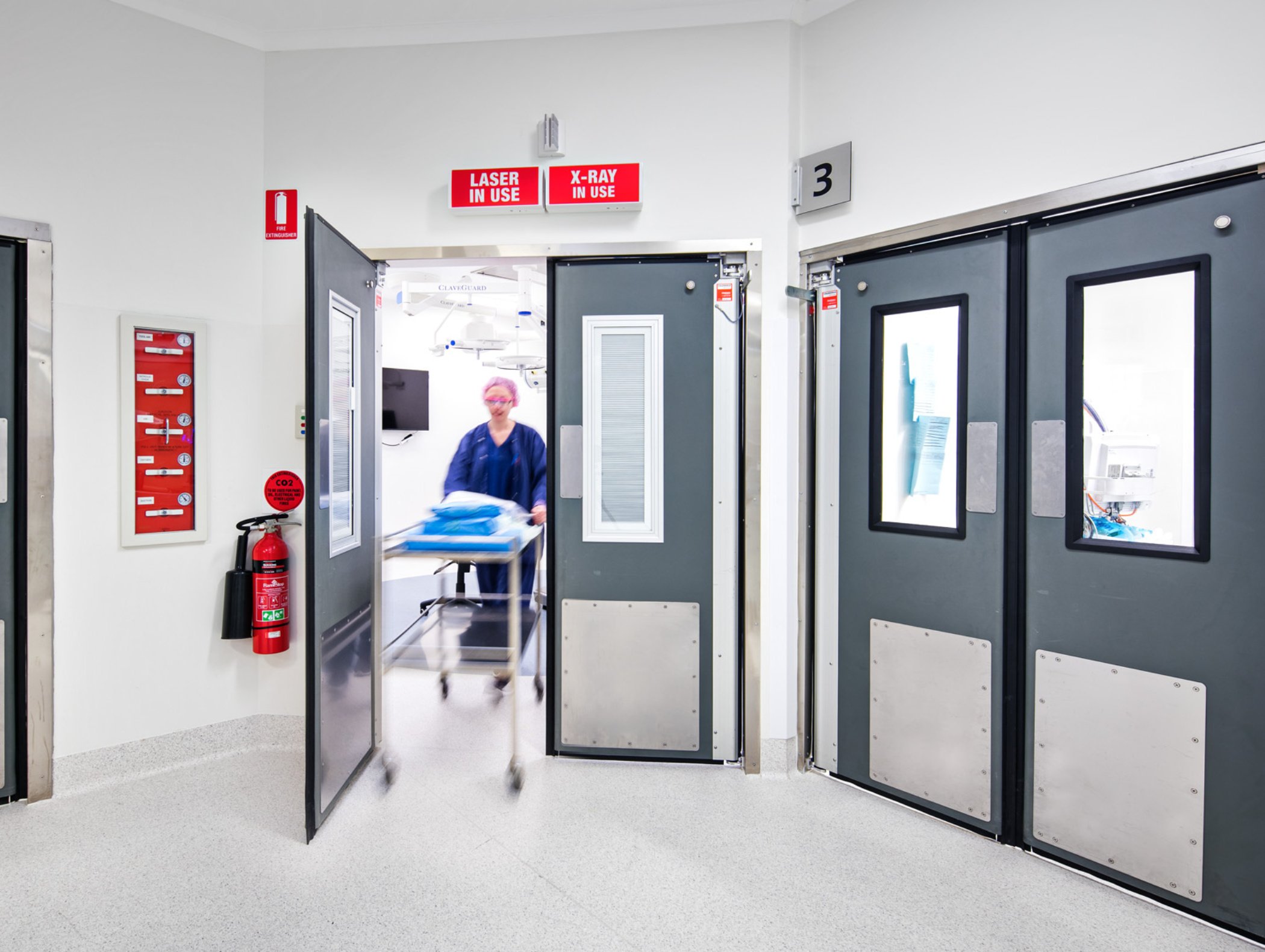
Swing and sliding doors are often specified for staff access, healthcare areas, laboratories, retail back-of-house zones and hygienic production spaces. Automation can provide touch-free entry, controlled permissions and better movement of trolleys or wheeled equipment. Stainless-steel construction is particularly relevant where corrosion resistance, cleanability and durability are required.
For hospital theatre and clinical settings, the door must support the room's workflow as well as infection-control procedures. Activation devices, door finishes, seals and clear opening width should be considered together. A sensor arrangement that works well in a public foyer may be inappropriate in a constrained clinical corridor with beds, equipment and regular staff movement.
Sensors and controls determine how the door behaves
The activation method should reflect who or what is using the opening. Induction loops, motion sensors, radar devices, pull cords, push buttons, access readers and remote controls all have a place, but none is universally suitable. A forklift-only doorway may benefit from vehicle detection, while a mixed pedestrian and vehicle area needs a more cautious approach to activation and protection.
Safety devices must be positioned to detect realistic hazards, not just satisfy a drawing. Photoelectric beams, light curtains, safety edges and presence sensors can help prevent a door closing on a person, trolley or vehicle. Their location needs to account for the travel path, door geometry, surrounding guarding and the way staff actually use the space.
Control logic also deserves attention. Opening and hold-open times should support the task without leaving the doorway exposed longer than necessary. Interlocking may be required between two doors in an airlock or controlled zone. Access-control integration may restrict operation outside approved hours or provide entry only to authorised personnel. For emergency egress, fire systems and building-management interfaces, the required door response must be defined before installation and tested at commissioning.
Design for the real operating environment
A door automation proposal should be tested against conditions on site. This includes more than door dimensions and available power. Facilities should assess traffic volumes at peak periods, shift patterns, vehicle types, floor levels, wind loads, wash-down regimes, ambient temperature, corrosive exposure and the likelihood of accidental impact.
A cold-store doorway, for example, may require rapid operation, insulated components and an arrangement that limits condensation and ice-related issues. A food manufacturing site may prioritise smooth, cleanable surfaces and materials that tolerate regular cleaning chemicals. A waste or recycling facility may need a more damage-tolerant arrangement with protected controls and clear service access.
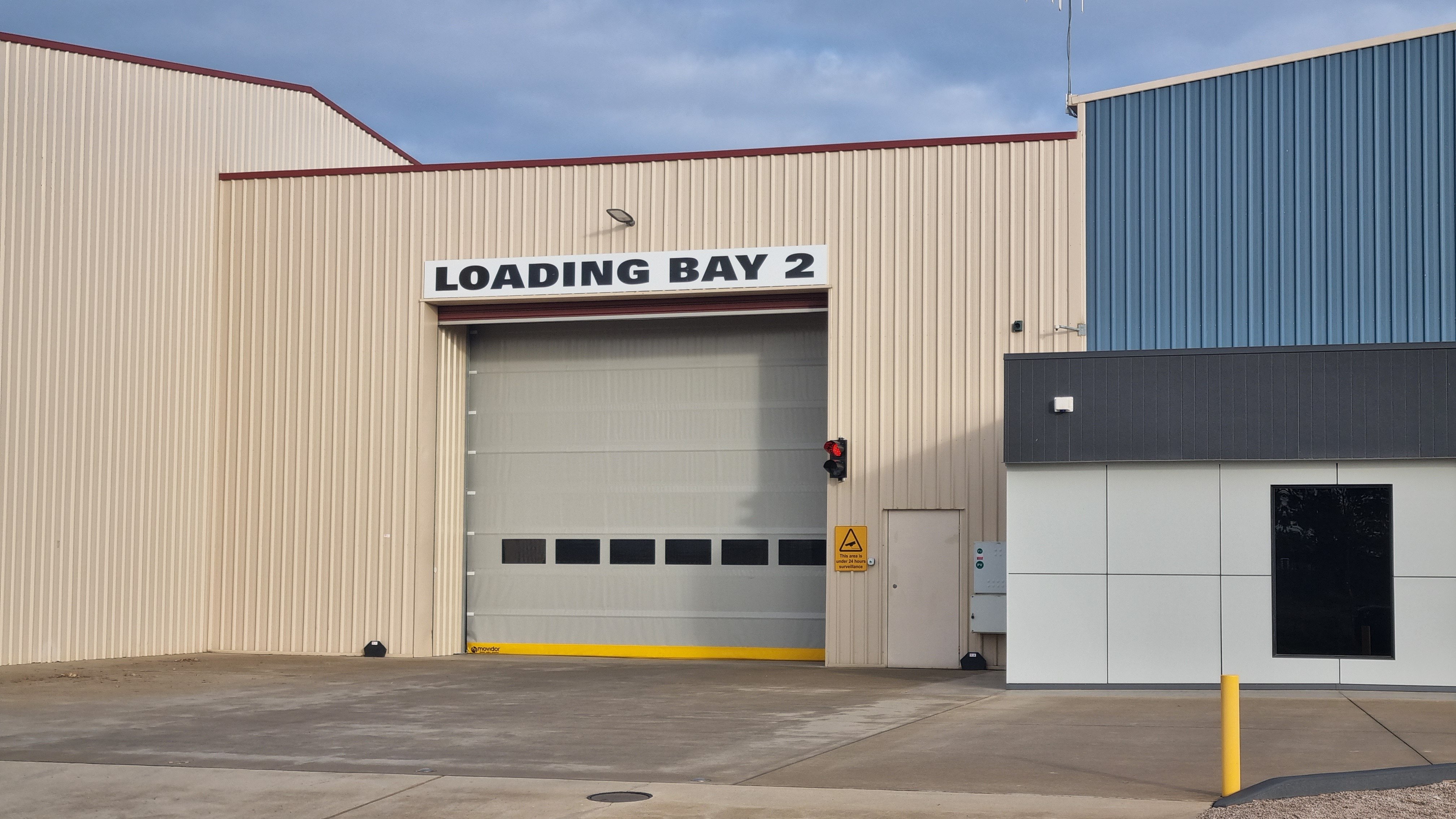
The surrounding area is part of the specification. Bollards, guide rails, line marking, warning lights and pedestrian segregation can reduce impacts and improve operator awareness. These measures do not replace safety devices, but they can materially reduce preventable repairs in high-traffic zones.
Installation and commissioning are operational work
An automated door can only perform as intended when it is accurately installed and commissioned. Structural support, track alignment, clearances, cable routing and control placement affect operation from day one. The installer should verify that the completed opening matches the approved design, rather than assuming site conditions have remained unchanged.
Commissioning should include more than confirming that the door opens and closes. It should test activation devices, safety functions, reversing behaviour, emergency operation, interfaces and hold-open timing under representative conditions. Site personnel also need practical handover information: how to isolate the door safely, what to do after a minor impact, how to use manual release arrangements and when to report an issue.
This stage is where specialised providers add value. A door may be mechanically sound, but unsuitable sensor positioning or incomplete control programming can create repeated stoppages that are difficult for an operations team to diagnose during a busy shift.
Maintenance protects uptime and lifecycle value
High-use doors accumulate wear at rollers, guides, springs, drive components, seals and safety devices. Dust, moisture, cleaning chemicals and minor vehicle strikes can accelerate the process. Waiting for total failure usually means an unplanned disruption, a security vulnerability or an opening that cannot safely be used.
Preventative maintenance allows components to be inspected, adjusted and replaced before a small fault becomes a larger shutdown. It also confirms that safety devices remain correctly aligned and that the door still operates as specified after changes to traffic patterns or facility layout. The right visit frequency depends on door type, cycle count, environment and criticality. A frequently used production opening generally warrants closer attention than a low-cycle store room door.
When selecting a supplier, assess their capability beyond the initial installation. Access to locally engineered products, replacement components, technicians familiar with the system and a clear inspection process can make a material difference when a critical opening is out of service.
Door automation works best when it is treated as operational infrastructure: specified around the task, installed with care and maintained for the conditions it faces. The next time an opening creates queues, energy loss or safety concerns, start with the workflow around it - the right door system will follow.