




A rapid roller door that stops working during dispatch can bring forklift traffic to a standstill. In a cold store, a door that fails to close properly can also affect temperature control. For facility managers, keeping industrial doors operating reliably is essential to maintaining productivity, safety and controlled working environments.
High-cycle doors are designed for frequent operation, but regular use, environmental conditions and accidental impacts can still cause wear or damage.
The most effective approach is to combine routine operator checks with scheduled preventative maintenance, based on the door's cycle count, operating environment and manufacturer's recommendations.
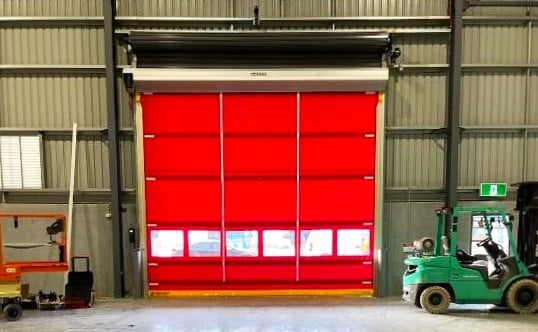
How do you maintain a high-cycle industrial door?
Maintaining a high-cycle industrial door involves regularly checking its condition, monitoring operating performance, keeping accessible components clean and arranging professional servicing.
A practical maintenance program should cover:
- Door curtains, panels, guides and seals
- Motor and controller operation
- Safety sensors and activation devices
- Door opening and closing performance
- Fixings, cables and other wear components where applicable
- Fault history and recurring operating issues
- Damage caused by forklifts or other equipment
Routine visual checks can be completed by authorised site personnel where permitted by the manufacturer's instructions. Mechanical adjustments, electrical work and safety-critical testing should be carried out by suitably qualified technicians.
For further guidance, refer to Safe Work Australia's Model Code of Practice: Managing Risks of Plant in the Workplace, which explains how businesses can manage risks associated with workplace machinery and equipment.
How often should high-cycle industrial doors be serviced?
Remax Doors generally recommends preventative maintenance every six months for high-speed roller doors and sectional doors.
However, the appropriate servicing frequency depends on how often the door operates, its environment and the consequences of an unexpected breakdown.
|
Door usage |
Recommended maintenance approach |
|
Standard industrial use |
Six-monthly preventative maintenance |
|
High-cycle use, exceeding 50,000 cycles annually |
Consider quarterly servicing |
|
Low-use applications |
Annual servicing may be suitable following assessment |
|
Harsh or critical environments |
Review servicing frequency based on operating conditions and risk |
For a newly installed door, Remax recommends beginning with six-monthly servicing and reviewing the interval once the service history and operating cycles are established.
A door completing 200 cycles per working day across 250 days will reach approximately 50,000 cycles annually.
The important consideration is not simply the age of the door, but how much work it performs.
For further details, see Remax's Preventative Maintenance Service, including its recommended service intervals and maintenance activities.
What should facility managers check between services?
Regular visual and operational checks can help identify developing problems before they interrupt production or dispatch.
1. Check the door curtain, panels and guides
Look for visible signs of damage, including:
- Tears, dents or deformation
- Unusual rubbing or scraping
- Loose or damaged fixings
- Debris in accessible guide areas
- Damage to bottom edges or seals
- Uneven movement during normal operation
For rapid roller doors, check whether the curtain moves smoothly and returns to its normal position after each cycle.
For conventional sectional doors, visible panel, roller and track damage may indicate developing mechanical problems.
Different door designs require different maintenance procedures.
For example, the Remax Movidor Rapid Roller Door uses a self-repairing curtain system designed to relocate after certain impacts. Its design also eliminates springs, cables and tensioning belts commonly found in other door systems.
The Enturi Retractable Sectional Door uses a compact folding arrangement rather than conventional horizontal overhead tracks.
Maintenance must therefore follow the requirements of the specific door model.
2. Monitor motor and controller performance
A change in how a door operates can be an early warning of a developing fault.
Watch for:
- Slower opening or closing
- Delayed responses to activation
- Unusual motor or drive noises
- Intermittent operation
- Unexpected stopping or reversing
- Repeated controller faults
These symptoms may relate to mechanical wear, sensor problems, electrical issues or controller settings.
Remax preventative maintenance includes checking motor and controller operation, reviewing fault history and checking electrical supply conditions.
If the door is repeatedly resetting or displaying fault messages, record the symptoms and arrange professional inspection rather than continually restarting it.
3. Check that safety devices are functioning reliably
Industrial doors may incorporate photoelectric beams, light curtains, safety edges, presence sensors and traffic warning systems, depending on the door model and configuration.
These devices help manage movement through busy openings where forklifts, pedestrians and other equipment operate.
Report any of the following:
- A door failing to respond to an obstruction
- Unexpected reversals
- Damaged sensor housings
- Misaligned or visibly damaged equipment
- Warning lights not operating as expected
- Repeated faults after cleaning or resetting
Do not bypass safety devices to keep a door operating.
Required safety functions should be inspected and verified by a qualified technician using the approved test procedures for the particular system.
SafeWork NSW provides additional information about plant, machinery and equipment safety, including workplace responsibilities for managing risks associated with machinery.
4. Inspect seals and doorway condition
A door that opens and closes normally may still be affecting the facility if its seals are damaged.
Inspect accessible areas for visible gaps, worn seals or signs of deterioration.
In temperature-controlled environments, poor sealing can contribute to unwanted air movement, condensation and additional refrigeration or heating demand.
In food processing facilities, damaged seals or incomplete closure may also affect hygiene and pest control.
The condition of the door should be assessed alongside its operating speed, opening frequency and the time it remains open.
5. Keep the doorway clear
Pallet wrap, packaging, dust and other debris can interfere with door operation.
Keep accessible doorway areas clear in accordance with site procedures and the manufacturer's instructions.
Cleaning methods must be suitable for the door materials, sensors and electrical components.
Do not use high-pressure cleaning equipment or chemicals on door components unless the manufacturer confirms they are suitable.
6. Report forklift impacts immediately
Forklift strikes are a common operational risk around busy industrial doorways.
Even where a door appears to continue working, an impact may damage guides, brackets, sensors or other components.
Some rapid doors, including Remax Movidor models, incorporate a self-repairing curtain system that can automatically relocate the curtain into its guides following certain impacts.
This can help reduce impact-related downtime, but it does not eliminate the need to inspect damage or investigate abnormal operation.
Where a door has been struck and is not operating normally, stop using it and arrange a professional assessment.
SafeWork NSW provides guidance on forklift safety and workplace traffic management, including managing risks around moving vehicles and pedestrians.
If the door requires repair, Remax offers Repairs and Breakdown Call-outs for industrial doors experiencing damage or operational faults.
What does professional preventative maintenance include?
A scheduled service goes beyond checking whether a door opens and closes.
Remax Doors' preventative maintenance program includes inspection and servicing of components that influence reliability, performance and safety.
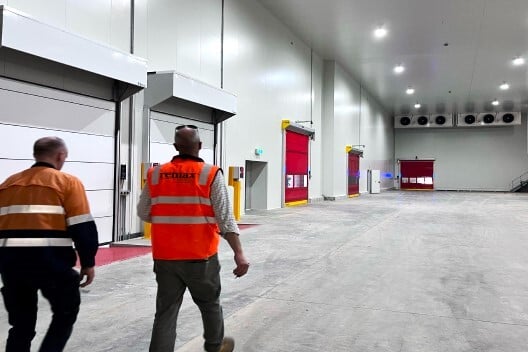
Typical activities include:
|
Maintenance activity |
Why it matters |
|
Check motor and controller operation |
Identify developing drive or control faults |
|
Review controller fault history |
Detect recurring problems before breakdowns |
|
Check electrical supply conditions |
Identify issues affecting reliable operation |
|
Check and adjust travel limits where required |
Support correct opening and closing positions |
|
Clean sensors, wiring and accessible components |
Reduce contamination-related faults |
|
Inspect fixings and wear components |
Identify looseness or deterioration |
|
Complete feasible minor repairs |
Address smaller issues during the scheduled visit |
|
Prepare a service report |
Document findings and recommended follow-up work |
Examples of minor repairs that may be completed during a service include adjusting bent wind bars, repairing minor curtain damage or addressing loose wiring, where feasible and appropriate.
Larger repairs or replacement parts may require a separate quotation and follow-up visit.
Remax advises that a preventative maintenance service typically takes approximately one hour per door, although actual requirements depend on the installation and work involved.
You can read more about the Remax Preventative Maintenance Service and the inspections included in a scheduled visit.
Why is maintenance especially important for cold storage and food processing?
Doors in cold storage and food production facilities perform more than an access function.
They help separate environments with different temperature, hygiene and operational requirements.
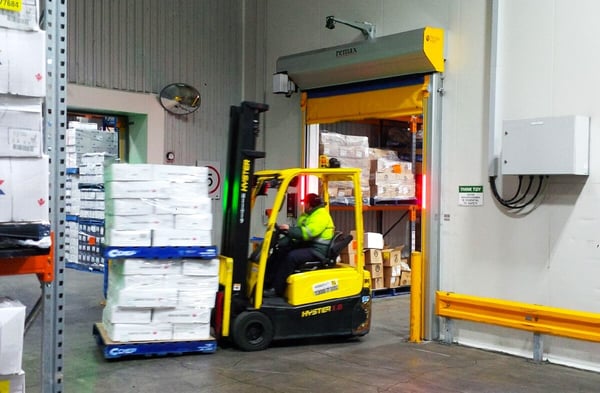
A door that remains open unnecessarily or fails to seal properly can increase air exchange between spaces.
Maintenance should therefore consider:
- Door closing performance
- Condition of seals and curtain materials
- Sensor reliability
- Condensation and moisture exposure
- Cleaning compatibility
- Door cycling and traffic patterns
Where doors are exposed to wash-down, moisture or contamination, components should be inspected according to the manufacturer's requirements and the facility's hygiene procedures.
Maintaining door performance helps support temperature stability, efficient movement and consistent operating conditions.
What are the warning signs that a high-cycle door needs urgent attention?
Arrange a professional inspection if you notice:
- The door fails to close or opens unexpectedly.
- Safety devices are damaged or unreliable.
- The curtain or panels move unevenly.
- A forklift has struck the door and damage is suspected.
- The motor makes unusual noises.
- Controller faults repeatedly return.
- The door is binding, scraping or operating inconsistently.
- Springs, cables or other safety-critical components appear damaged on applicable door types.
If a door presents an immediate safety risk, remove it from normal operation in accordance with site procedures until it has been assessed and made safe.
Continuing to operate a damaged door may increase repair costs and create additional hazards.
For urgent issues, contact Remax through its Repairs and Breakdown Call-outs service or call 1800 010 221.
Is preventative maintenance more cost-effective than waiting for a breakdown?
Preventative maintenance is designed to identify wear, damage and recurring faults before they result in unexpected downtime.
For high-cycle facilities, a breakdown can affect more than the cost of repairing the door.
Depending on the application, it may interrupt:
- Forklift and pedestrian access
- Dispatch schedules
- Production flow
- Temperature-controlled operations
- Security and access control
Scheduled servicing also creates a maintenance history that helps facility managers understand recurring issues and plan future repairs.
The financial benefit depends on the facility, door type and cost of downtime, but preventative maintenance gives teams greater visibility over the condition of critical assets.
What preventative maintenance plans does Remax Doors offer?
Remax Doors offers three preventative maintenance service plans for industrial door systems.
Ready Service: Entry-level planned maintenance with six-monthly servicing and a one-year agreement.
Assured Service: A two-year plan with parts warranty coverage, prioritised service attendance and online technical support.
Premium Service: A four-year plan offering longer-term maintenance and parts warranty coverage, together with prioritised support.
All three plans include six-monthly scheduled preventative maintenance and service documentation.
Warranty terms, eligibility and inclusions should be confirmed for the particular door and agreement.
Compare the inclusions and coverage of the Remax Doors Preventative Maintenance Service Plans.
Frequently asked questions about high-cycle door maintenance
What is considered a high-cycle industrial door?
A high-cycle industrial door is a door designed or used for frequent opening and closing. Actual cycle requirements depend on the model and application. A facility operating above 50,000 cycles annually should review whether more frequent servicing is appropriate.
How often should a rapid roller door be serviced?
Remax generally recommends six-monthly preventative maintenance, with quarterly servicing considered for doors exceeding 50,000 cycles per year.
Can warehouse staff maintain industrial doors themselves?
Authorised staff can perform permitted visual checks, basic housekeeping and operational observations. Electrical repairs, mechanical adjustments and safety-critical work should be completed by suitably qualified technicians.
What causes high-cycle industrial doors to break down?
Possible causes include component wear, accidental impacts, damaged sensors, controller faults, contamination, misalignment and environmental exposure.
Do self-repairing rapid roller doors still need maintenance?
Yes. Self-repairing curtain systems can reduce certain types of impact-related downtime, but motors, controllers, sensors, fixings and other components still require scheduled inspection and maintenance.
Does Remax service doors from other manufacturers?
Yes. Remax services and repairs a range of industrial door brands, including selected rapid roller doors from other manufacturers. Availability depends on the door type and service location.
How long does preventative maintenance take?
A Remax preventative maintenance visit typically takes around one hour per door, depending on the installation, condition and work required.
Keep your industrial doors working when your facility needs them
High-cycle doors are relied on throughout the working day. When they fail, the consequences can extend to production, dispatch, temperature control and workplace safety.
Regular visual checks, accurate maintenance records and scheduled professional servicing help identify developing problems before they interrupt operations.
Not sure whether your industrial doors are being serviced often enough?
Talk to Remax Doors about a preventative maintenance schedule suited to your door types, operating cycles and site conditions.
Explore Remax Preventative Maintenance Service Plans
Or call 1800 010 221 to speak with the Remax Service Team.