




The food and beverage sector runs on tight temperature tolerances. For cold storage and frozen distribution, winter actually helps: lower ambient temperatures ease refrigeration load and reduce air exchange losses at door openings. For dry storage and ambient processing facilities, the relationship with winter runs the other way.
Roy Young has spent this winter visiting food and beverage facilities across regional and metropolitan Victoria. As Sales Manager at Remax Doors, his site visits range from large processing plants to dry storage distribution centres, and the pattern he's seeing is consistent.
.jpg?width=247&height=247&name=Testimonials%20June%20(5).jpg)
“When we talk about food and beverage, we talk about the whole chain, from farm to supermarket shelf,” Roy says. “Every point in that chain has different needs. And winter creates specific problems at quite a few of them that don't get talked about enough.”
The dry storage problem most facilities aren't accounting for
For cold storage and frozen distribution, winter conditions can actually help. A lower ambient temperature reduces the differential across refrigeration door openings, eases compressor load, and generally makes the cold chain easier to maintain. The facilities that are struggling this winter are the ones operating in ambient or cool-ambient conditions, where the absence of active climate control means the building envelope is doing all the work.
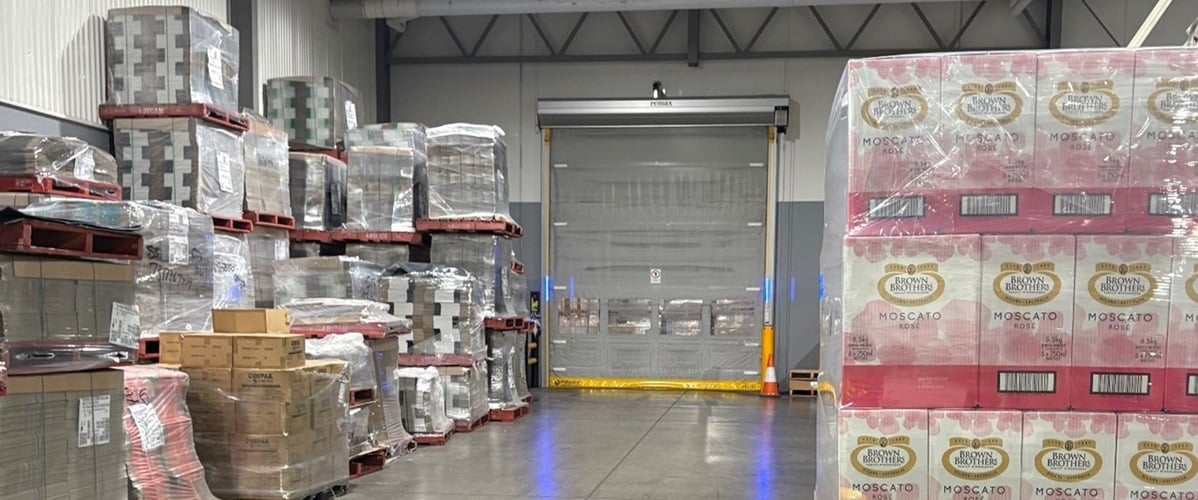
Food safety standards generally require dry storage temperatures to be held between 10°C and 21°C, with relative humidity kept below 60%. A wide range of food and beverage products depend on those conditions being stable: finished beverages including beer, wine, spirits, and carbonated drinks; dry raw ingredients in the pre-processing stage; and packaged finished goods at the end of the production line.
“Those facilities are often left out of the conversation because people assume the temperature issue doesn’t apply to them, But during winter, especially in the southern states, when you're loading and unloading through a slow door dozens of times a day, you're letting cold damp air into a space that needs to stay temperature-stable and dry. You might not see the effect straight away. But you're potentially risking moisture damage and reducing shelf life, which becomes a costly problem down the line.”
The employee cost: what winter does to your team
The other issue that Roy observes during winter is what persistent cold draughts and blasts of cold air does to the people working in these facilities.
Prolonged thermal discomfort leads to fatigue, reduced concentration and productivity, and increased absenteeism. In processing environments where workers stand at fixed stations for extended periods and hygiene requirements limit what protective clothing is practical, cold air coming through a slow or poorly sealing door is a WHS exposure and can become a risk to health.
Workers in environments with consistent cold air ingress are more susceptible to the respiratory illnesses that circulate in the cooler months. Absenteeism from those illnesses push facilities into overtime or undermine production reliability. This shows up in labour costs, in throughput, and eventually in customer relationships.
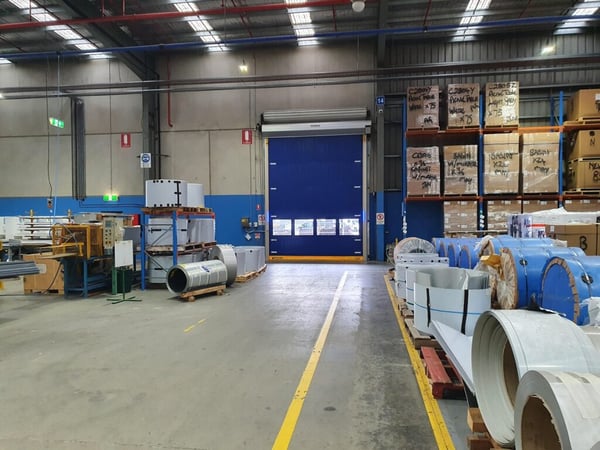
Roy draws on an example from a major manufacturing client who was suffering from the cost of constantly recruiting and training new staff due to high staff turnover and looking for ways in which to improve staff comfort in their warehouse:
“We had a client in Dandenong who was dealing with this exact issue. Their problem was high staff turnover in the winter months. They couldn't hold people; the recruiting costs were enormous. They replaced all their warehouse doors with rapid doors to keep it at a stable ambient temperature.”
The cost of inaction
The cost of not acting on these kinds of winter-related conditions is almost always higher than the cost of a door upgrade, once you measure it honestly.
“We try to get customers to think about what inaction actually costs across the full picture, not just the product at risk or the energy running hard, but the flow-on effects. It’s the delayed delivery, the damaged customer relationships, the staff turnover. Once you map that out, the right door pays for itself.” - Roy Young
To talk through what you're seeing at your site this winter, contact the Remax Doors team.