




A rapid door is often justified as an energy-saving upgrade, but rapid door payback is rarely driven by one line item alone. In a high-use loading bay, cool room, production area or clean environment, every slow opening can affect vehicle movements, conditioned air, hygiene controls, pedestrian safety and the availability of the doorway itself. The meaningful calculation is the cost of operating the opening over time, not simply the purchase price of a new door.
For facility managers and project teams, the strongest business case starts with actual site conditions. How often does the opening cycle? How long does the existing door remain open? What happens when it fails? These details determine whether a rapid door will provide a modest improvement or become a practical investment in business continuity.
Why rapid door payback is an operational calculation
Rapid roller doors are designed to open and close quickly in frequent-traffic applications. Their value comes from reducing the time an opening is exposed while allowing forklifts, pallet jacks, trolleys and authorised personnel to move without unnecessary delay.
This changes several operating costs at once. A faster cycle can limit the exchange of warm and cool air at refrigerated or air-conditioned openings. It can reduce dust, insects and airborne contaminants entering a processing area. It can also reduce queuing at busy internal transitions, where a conventional door may remain open while operators wait for it to close.
The result depends on the application. At an infrequently used warehouse opening with no temperature separation, the financial return may rely mainly on improved traffic flow and reduced damage risk. At a cold-chain facility or food production site, reducing open-door time can have a far greater effect on refrigeration load, product protection and hygiene procedures. A payback assessment needs to reflect the operating environment rather than apply a generic savings figure.
Start with the opening, not the purchase price
The installed cost of a rapid door is visible and easy to compare. The costs created by a poorly performing opening are often dispersed across utilities, labour, maintenance, stock handling and production. Assessing the opening properly brings those costs into view.
Begin by observing the doorway across a normal shift. Record the number of cycles, the average duration of each opening, the type of traffic using it and any regular periods of congestion. A door that opens 30 times a day has a different operating case from one cycling 300 times a day, even if both have the same clear opening size.
Next, identify what is separated by the door. This may be ambient and refrigerated space, a washdown area and a dry production zone, an external loading area and a climate-controlled warehouse, or a clean clinical space and a public corridor. The more critical that separation is, the greater the cost of prolonged opening time.
It is also worth looking beyond normal operation. If an existing door sticks, has damaged panels, requires manual intervention or is regularly left open to avoid delays, the facility has already developed a workaround. That workaround may carry costs that do not appear in a door maintenance budget. It may expose stock to temperature change, create a security gap or require staff to monitor traffic rather than perform productive work.
Measure the costs that matter locally
Energy use is a valid component of rapid door payback, particularly where refrigeration or conditioned air is involved. However, it should be based on the actual temperature differential, opening dimensions, cycle frequency and operating hours. A large freezer entrance will behave very differently from a small internal warehouse opening.
Labour time should also be considered where drivers or operators wait for slow doors, manually operate them or make repeated trips because traffic routes are poorly controlled. A few seconds saved per movement may appear insignificant, but it can become material across multiple shifts, frequent pallet movements and several doorways.
Then consider disruption costs. In food, pharmaceutical, healthcare and controlled manufacturing environments, an open or failed door can interrupt a process, compromise a controlled zone or trigger additional cleaning and compliance activity. These costs may not occur every day, but they are relevant to the lifecycle value of a dependable door system.
Where rapid doors usually return value fastest
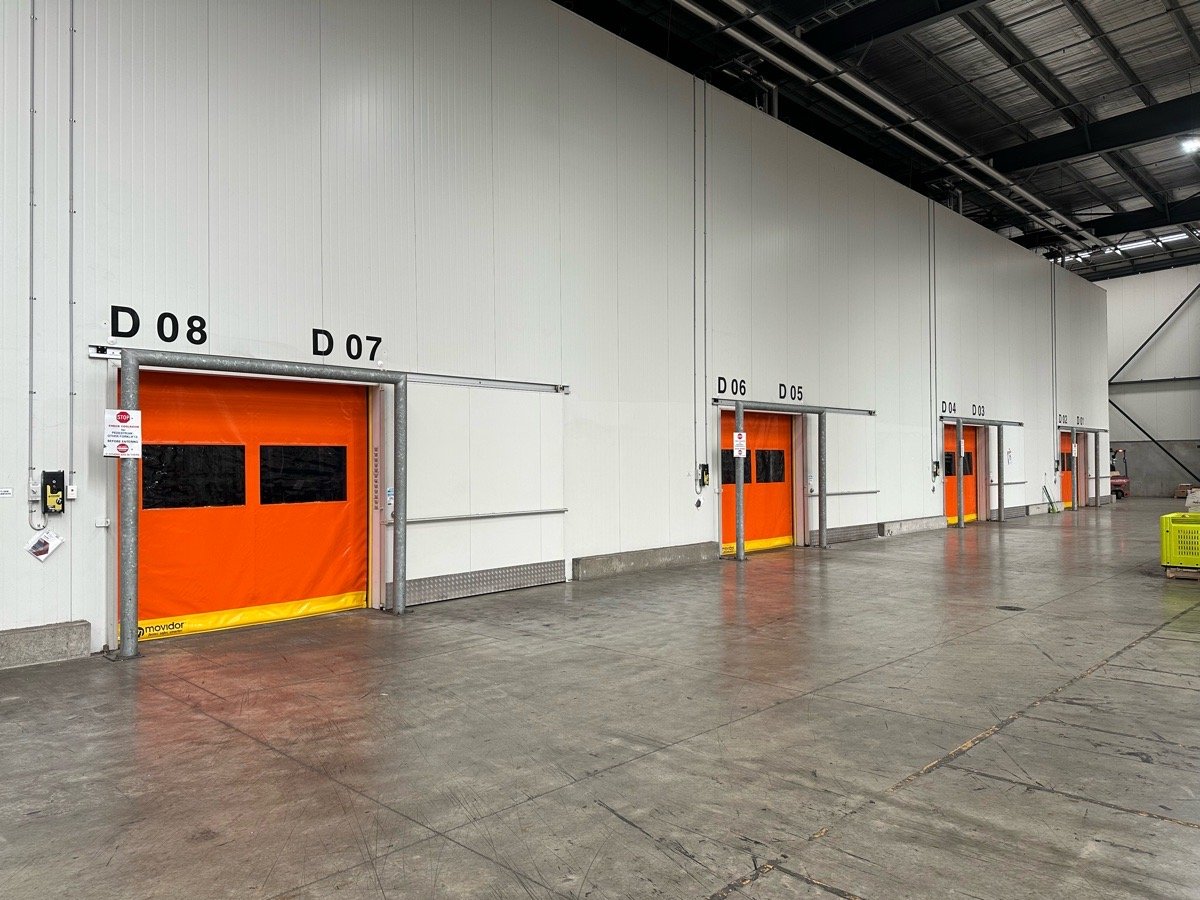
The strongest applications tend to have high cycle counts and a clear need to limit the time an opening remains exposed. Cold stores, freezer rooms, food processing facilities, distribution centres, washdown areas, manufacturing lines and busy internal logistics routes are common examples.
In a cold room, a rapid door can help reduce warm-air infiltration by closing promptly after a forklift passes. The door is not a substitute for well-designed insulation, refrigeration capacity or disciplined operating procedures, but it supports all three. Where condensation, frost and temperature recovery are recurring concerns, a faster opening cycle can improve day-to-day control.
In food and beverage processing, the benefit may be as much about hygiene as temperature. A purpose-specified rapid door can reduce the time pests, dust or external contaminants have to enter a sensitive zone. Material selection, cleanability and the door's ability to withstand frequent operation must suit the washdown regime and site standards.
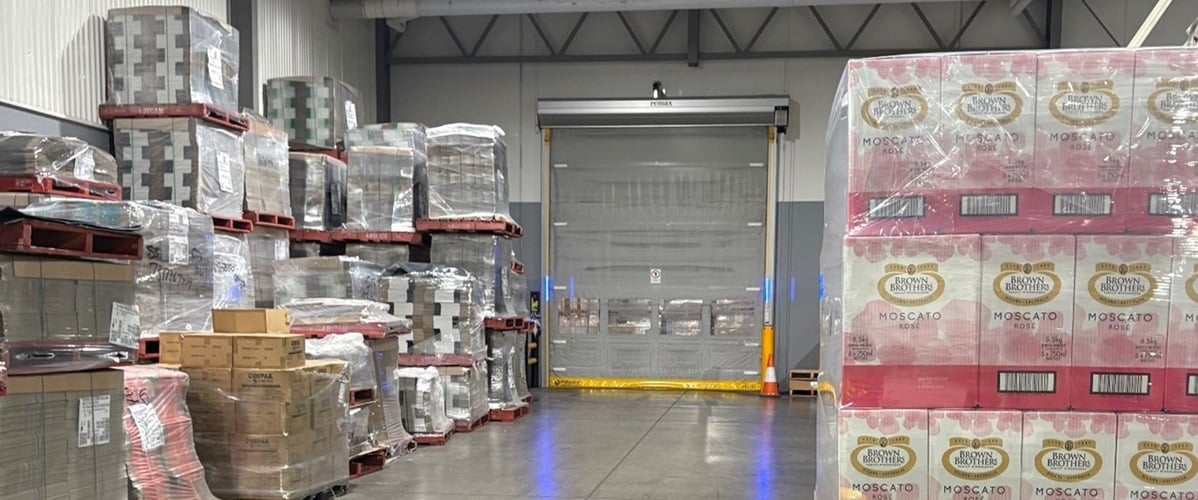
At warehouse and manufacturing transitions, throughput may be the dominant factor. Rapid doors help maintain movement between zones without encouraging staff to leave an opening unattended. Correct sensor placement and control logic are essential here. A door that opens too early, stays open too long or causes drivers to stop unnecessarily will dilute the expected gain.

Specify the door and controls as one system
Door speed alone does not guarantee a good result. The curtain, guides, drive system, safety devices, activation method and installation detail all affect performance. A door must suit the opening size, wind exposure, internal pressure conditions, traffic type and duty cycle.
For example, a door at an external loading interface may need a different design approach from an internal production opening. External exposure can introduce wind load, weather ingress and impact risks. Internal high-use openings may place greater emphasis on rapid cycling, safety sensing and minimising air transfer between zones.
Activation is equally important. Induction loops, radar sensors, pull cords, push buttons, access controls and interlocked systems each have a role. The right method depends on whether the opening is used by forklifts, pedestrians, authorised staff or a combination of traffic. Overly broad activation can create unnecessary cycles, while restrictive activation can cause delays and unsafe behaviour.
Safety must be built into the decision, not added after the fact. The door should be selected and configured to manage the actual movement pattern around it, including pedestrian crossover points, vehicle approach speeds and line-of-sight limitations. A faster door that is poorly integrated into the traffic route can create new operational risks.
Include maintenance in the payback model
A rapid door is a high-cycle item of operational infrastructure. Like conveyors, dock equipment and refrigeration plant, it needs planned inspection and maintenance to deliver its expected service life. Leaving servicing out of the financial case can make the first-year numbers look attractive while understating lifecycle cost.
A realistic model includes scheduled maintenance, likely wear components, response arrangements for faults and the availability of local technical support. It should also allow for the cost of downtime. For a critical opening, a low-cost repair that takes several days to arrange may be more expensive than a higher-quality service arrangement that restores operation quickly.
Installation quality matters just as much. Accurate site measurement, suitable structural fixing, correct commissioning and operator handover all influence how reliably the door performs. Remax Doors approaches rapid door projects as complete access systems, with specification, installation and ongoing servicing considered alongside the product itself.
Build a defensible investment case
A useful payback calculation does not need false precision. Establish a baseline using cycle counts, open-door duration, maintenance records, delay observations and relevant energy data. Then estimate how a correctly specified rapid door will change those conditions. Keep energy, labour, maintenance avoidance, product protection and downtime reduction as separate assumptions so they can be reviewed by operations, finance and maintenance teams.
Be conservative where data is uncertain. It is better to present a credible range of outcomes than promise a fixed return based on ideal operating behaviour. Some facilities will see a direct and measurable energy reduction; others will gain most from fewer delays, better access control or reduced exposure of a hygienic area.
Before approving the project, inspect the doorway during its busiest period and speak with the people who use it. The best rapid door investment is not the one with the highest advertised speed. It is the one that keeps a critical opening moving, protected and available through the demands of every shift.