




Last Updated: November 5, 2026
Quick Summary
Steel sectional doors lift vertically in panels along overhead tracks, so they suit commercial buildings where side room is tight but ceiling clearance exists. They win on insulation and appearance, with insulated panels delivering high thermal performance for warehouses, showrooms and cold storage.
- Roller doors are recommended where headroom is limited, while sectional doors suit buildings with tight side room.
- Overhead Door's specifications list 51 mm panels with a 7.35 R-value on one commercial series.
- Apple Door's guide puts typical sectional steel door life at 20 to 25 years with proper maintenance.
- Motorised operation is standard on most commercial sectional doors; manual suits low-cycle storage buildings.
- Maintenance checks cover spring tension, cable condition, roller and track alignment, and seal integrity.
Table of Contents
- Steel Sectional Doors vs Roller Doors: Which Suits Your Building?
- Insulated Sectional Doors for Warehouses and Cold Storage
- Sectional Door Sizes and Custom Openings
- Steel Construction and Heavy-Duty Performance
- Vision Panels, Glazing and Finishes
- Manual and Automated Operation
- Safety, Compliance and Lifecycle Cost
- What Maintenance Do Sectional Doors Need?
- Frequently Asked Questions
Steel Sectional Doors vs Roller Doors: Which Suits Your Building?
Steel sectional doors lift vertically in panels along overhead tracks; roller doors coil into a drum above the opening. That difference decides which suits your site, since each demands different headroom and side room.
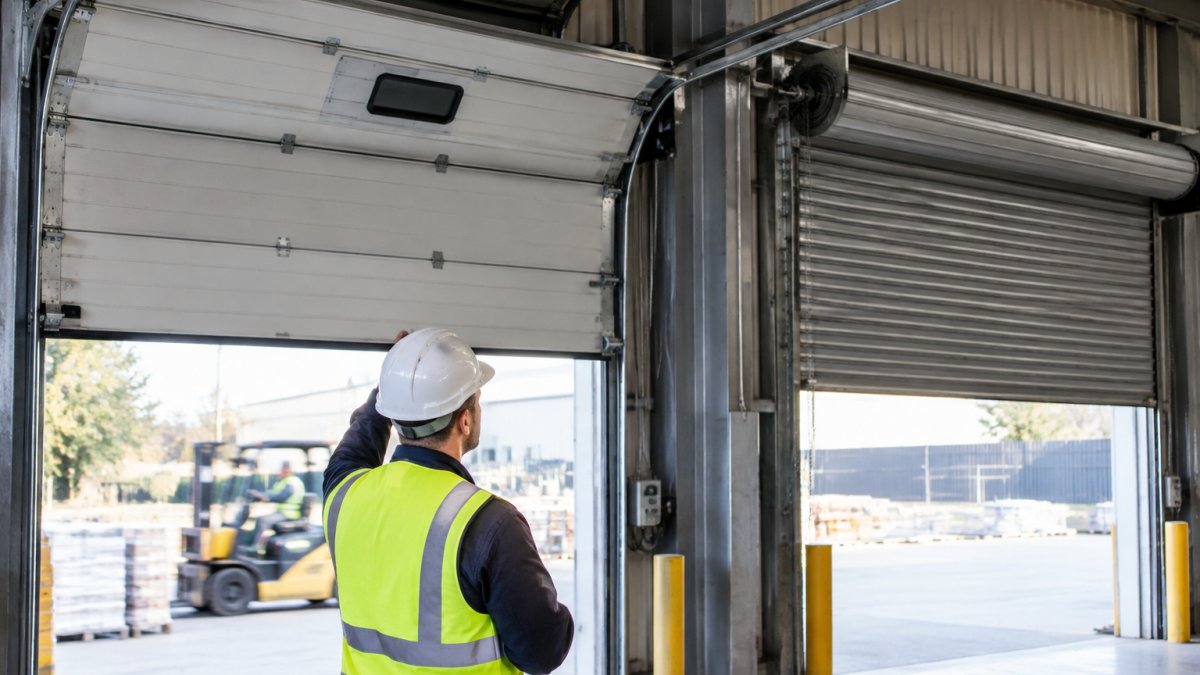
According to Clopay's commercial door guidance, rolling steel doors are recommended where headroom is limited, while sectional doors suit buildings where side room is tight. Sectional doors win on insulation and appearance; roller doors win on tight ceilings and lower upfront cost.
Specifying a sectional door without measuring ceiling drop first can lead to costly problems.
Insulated Sectional Doors for Warehouses and Cold Storage
Insulated sectional doors are panelled doors built with a foam core between steel skins, and they are the default choice wherever temperature control matters. Insulated compact sectional doors are built for these temperature-controlled spaces.
For cold storage and food production, every opening cycle can leak conditioned air. Remax Doors builds the Bespoke Enturi Sectional overhead door for commercial and high-end showroom applications.
Sectional Doors for Commercial Facilities
Sectional doors provide access for deliveries, vehicles and equipment across warehouses and commercial facilities. Insulated panel options can help limit heat transfer while the door is closed, although temperature-controlled applications also require careful consideration of seals, opening frequency and operating speed.
Overhead space is another selection factor. Conventional sectional doors typically run along horizontal tracks extending into the building. These tracks need to be coordinated with lighting, ductwork, sprinklers and other services.
Where keeping this space clear is a priority, the Enturi Retractable Sectional Door offers an alternative. Its panels fold into a compact cassette directly above the opening, eliminating horizontal ceiling tracks. This leaves more overhead space available for services and equipment while creating a cleaner internal appearance.
Sectional Door Sizes and Custom Openings
Choosing a sectional door involves more than matching the opening’s height and width. Available headroom, side clearance, structural support and nearby services all influence which configuration will suit the site.
For projects where conventional tracks would interfere with the layout, Remax Doors offers bespoke Enturi configurations, including panel finishes and glazing options. Its compact overhead mechanism provides greater flexibility when planning the space, subject to the cassette’s headroom and installation requirements.
Sectional Door Sizes and Custom Openings
Standard sizes cover many loading bays, but odd openings and low ceilings often need a different approach; the real constraint is clearance above and beside the opening. Remax Doors manufactures in Australia and offers bespoke design for unique site requirements.
Click here to Download Enturi Door Brochure
Steel Construction and Heavy-Duty Performance
Steel sectional doors are built around a steel panel, a heavy-duty bottom rail and reinforced hinges, separating a door rated for daily forklift traffic from one rated for a car park. Apple Door's commercial garage door guide puts typical sectional steel door life at 20 to 25 years with proper maintenance. Failure points are predictable: bottom rails take impact, rollers wear, springs fatigue. Coastal and wash-down environments need a higher-grade coating.
Vision Panels, Glazing and Finishes
Vision panels and glazing turn a solid steel door into a light source and a safety feature, letting pedestrians see forklift traffic before stepping through. A powder-coated finish resists corrosion, and colour choice supports architectural design on customer-facing buildings.
Manual and Automated Operation
Motorised operation is standard on most commercial sectional doors; manual operation still suits low-cycle storage buildings and workshops. Photo-eye sensors, soft-edge bottom rails and manual release handles are the basics.
Safety, Compliance and Lifecycle Cost
Safety and compliance for commercial doors in Australia sit under workplace health and safety law and the relevant Australian Standards for powered doors. Lifecycle cost decides the purchase: installed cost is one number, but maintenance, repair, energy loss and downtime are the rest. A scheduled check of springs, cables, rollers and seals can help reduce emergency callouts.
| Door Type | Best For | Main Constraint | Insulation |
|---|---|---|---|
| Steel sectional door | Warehouses, showrooms, cold storage | Needs ceiling clearance above opening | High with insulated panels |
| Roller door | Low-headroom sites, workshops | Limited thermal performance | Low to moderate |
| High-speed rapid door | High-cycle logistics and food production | Higher upfront cost | Varies by model |
What Maintenance Do Sectional Doors Need?
Sectional door maintenance covers several checks, including spring tension, cable condition, roller and track alignment, and seal integrity. A perished seal lets pests in and conditioned air out, undermining hygiene and energy performance. When choosing your Sectional Door - consider the after-sales support offered by your supplier as it can be very beneficial to choose a locally trusted technician who can supply you with Australian Made parts.
Frequently Asked Questions
What are steel sectional doors used for in commercial buildings?
Steel sectional doors close large openings on warehouses, workshops, showrooms, factories and storage buildings. Each door panel runs on overhead tracks and folds up under the ceiling, so the doorway clears completely when open. They suit sites where side room is limited but headroom is available, and they can be specified with vision panels, glazing and insulated panels for thermal performance and weather resistance.
How much clearance does an overhead sectional door need?
Sectional doors need ceiling space for the panels to travel and sit when open, plus room for the overhead tracks. Where headroom is tight, a roller door is often the better fit because it coils into a compact drum above the opening. For sites where overhead room is critially tight and requires overhead space for lights and services, consider doors such as the Enturi Sectional Door engineered to fold into a cavity above the door itself rather than running along the ceiling or requiring headroom for a roller door drum. Check both headroom and side room before choosing a door type, since the wrong choice can mean costly structural work or a door that will not operate reliably.
How often should a commercial sectional door be serviced?
Service frequency depends on usage, but doors in heavy daily operation generally need inspection more often than doors opened a few times a day. A maintenance schedule should cover springs, cables, rollers, tracks, the bottom rail and the motor or manual operation. Regular servicing helps keep the door reliable and catches wear before it causes downtime. Read more here: https://remaxdoors.com/servicing/
The challenge is not choosing a door, it is specifying one that survives your traffic, offers after sales support, is made for your climate and your audit requirements. Remax Doors has manufactured industrial and commercial door systems in Australia since 1999, with Movidor high-speed doors featuring a self-repairing crash relocation system, bespoke Enturi sectional doors, and nationwide service and preventative maintenance support. Get started with Remax Doors and specify a door built for your site rather than one you have to work around.