




Where Design Intent Meets Operational Reality
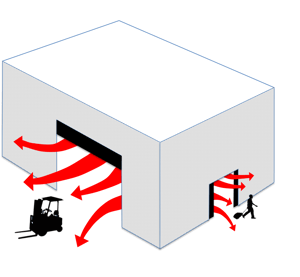
In a typical Australian warehouse or processing facility, the building envelope is rarely static. Forklifts move continuously through large openings. Doors cycle hundreds of times per day. Conditioned air escapes, external air enters, and HVAC systems work harder to maintain equilibrium.
From a design perspective, the building may meet every requirement of NCC Section J. From a construction perspective, it may be delivered on time and within budget.
Yet post-occupancy, performance often falls short.
A key reason lies in a largely unaccounted-for variable: air exchange through access points. In many commercial and industrial facilities, this can contribute to up to 11% of total energy loss - a figure that is rarely modelled in detail, and almost never budgeted explicitly.
This is not a failure of design or construction in isolation. It is a gap between intent, specification, and operational behaviour.
The 11% Energy Leak Hiding in Plain Sight
Energy efficiency strategies traditionally focus on insulation, glazing, and sealing of static envelope elements. However, in operational environments, the most significant losses often occur through dynamic openings. We're talking doors specifically.
Unlike walls or roofs, doors are:
• Frequently opened
• Subject to variable operating conditions
• Dependent on user behaviour and automation
• Rarely assessed beyond static performance metrics
This makes them one of the most active, and least understood, components of the building envelope.
For builders, doors are often procured as part of a discrete trade package. For architects, they are typically specified based on compliance criteria.
In both cases, their real-world performance is rarely interrogated.
The Building Envelope Is No Longer Static
The concept of a continuous, sealed building envelope is central to energy modelling. However, in practice, that continuity is repeatedly interrupted.
Every door cycle introduces pressure changes, temperature fluctuations and air infiltration and exfiltration. This transforms the envelope from a static system into a dynamic one, where performance is governed not just by material properties, but by frequency and duration of openings.
The implication is clear: A building can be compliant on paper, yet underperform in operation.

Section J (NCC 2022): Increasing Pressure on Performance
NCC 2022 has significantly tightened energy efficiency requirements for Class 5–9 buildings, placing greater emphasis on thermal performance, airtightness and reduction of operational energy use.
For architects, this introduces increased complexity in coordinating façade systems, services, and compliance pathways. For builders and project teams, it raises the stakes in delivering outcomes that align with both documentation and real-world performance expectations.
However, compliance frameworks inherently assume consistent performance conditions. Doors, by contrast, introduce variability. This is where gaps begin to emerge.
DtS vs JV3: Where Misalignment Begins
The NCC provides two compliance pathways:
• Deemed-to-Satisfy (DtS) - prescriptive, component-based
• JV3 Performance Solution - holistic, simulation-based
Under DtS, door systems are assessed based on static attributes such as insulation values, sealing and construction materials.
Under JV3, performance is evaluated at a whole-building level, allowing for more flexibility - but also introducing reliance on modelling assumptions. The limitation is that operational air exchange through doors is often simplified or underestimated in both approaches. This creates a disconnect:
• Architects may assume performance through modelling
• Builders may deliver compliance through specification
• Operators experience something entirely different
Static vs Dynamic Performance: The Core Issue
To understand the 11% energy gap, it is essential to distinguish between two types of performance:
Static Performance (Design-Focused)
• Thermal transmittance (U-values)
• Insulation levels
• Material properties
Dynamic Performance (Operational Reality)
• Opening and closing speed
• Frequency of use
• Duration of exposure
In high-cycle environments, dynamic performance dominates. A heavily insulated door that remains open for extended periods will typically result in greater energy loss than a faster, well-sealed system with lower nominal insulation. This is not a specification failure - it is a modelling and design consideration gap.
Where Projects Start Losing Value
For Architects
• Design intent compromised post-occupancy
• JV3 models not fully reflecting operational conditions
• Reduced likelihood of achieving targeted Green Star or NABERS outcomes
For Builders and Project Teams
• Increased HVAC loads
• Commissioning challenges
• Greater likelihood of post-handover performance issues
For Estimators and Procurement
• Focus on upfront cost over lifecycle performance
• Limited visibility of operational energy implications
The result is consistent across projects: energy loss is not explicitly budgeted - but it is inevitably incurred.
Beyond Energy: Compounding Impacts on Building Performance
Uncontrolled air exchange does not only affect energy consumption. It has broader implications for:
• Thermal comfort — temperature instability and drafts
• Indoor air quality — ingress of dust, fumes, and pollutants
• HVAC performance — increased wear and maintenance
• Occupant satisfaction — reduced productivity and comfort
For architects, this impacts Indoor Environmental Quality (IEQ) outcomes and for builders, it introduces performance risk and potential defects.
The Specification Gap: Where Intent Gets Lost
A common issue across projects is the gap between performance intent and procurement reality. Architectural documentation may define compliance requirements, but often omits:
• Opening speed expectations
• Cycle frequency considerations
• Air exchange performance
• Integration with HVAC zoning
As a result, procurement decisions default to minimum compliance and lowest capital cost, without accounting for how the system will actually perform in use.
Closing the Gap: A More Integrated Approach
High-performing projects increasingly adopt a more integrated approach to access systems.
For Architects
• Consider doors as active components of the envelope
• Incorporate operational behaviour into design thinking
• Align access points with HVAC and zoning strategies
For Builders and Project Teams
• Evaluate specifications beyond minimum compliance
• Coordinate door systems with services and usage patterns
• Consider lifecycle performance during procurement
For Procurement
• Shift from product-based to performance-based specification and prioritise: opening speed, seal integrity and automation and control.
Aligning Design, Specification, and Operation
Where design intent, specification, and operational performance are aligned, measurable improvements can be achieved in energy efficiency, thermal stability, maintenance reduction and occupant comfort.
FAQs
How do doors impact energy efficiency in commercial buildings?
Doors contribute to energy loss primarily through air exchange during operation, particularly in high-traffic environments where openings are frequent.
What role do doors play in NCC Section J compliance?
Doors must meet insulation and sealing requirements, but their operational performance can also influence overall building energy outcomes.
What is the difference between DtS and JV3 in relation to doors?
DtS assesses static compliance, while JV3 evaluates whole-building performance — though both may underrepresent dynamic air exchange.
How can architects and builders reduce air leakage?
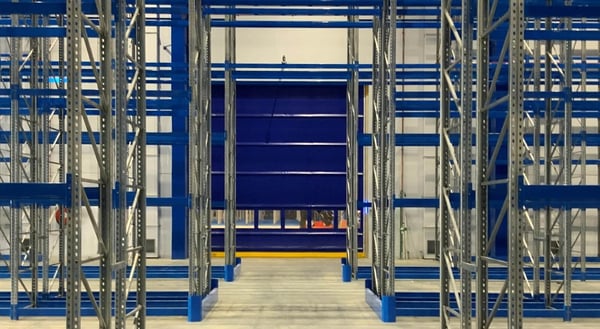
By specifying high-speed, well-sealed door systems and integrating them with HVAC and operational design strategies.
Why is dynamic performance more important than insulation in some cases?
Because in high-cycle environments, the duration and frequency of door openings can result in greater energy loss than conduction through materials.
.jpg?width=300&height=300&name=LinkedIn%20Blog%20Post%20(3).jpg)