




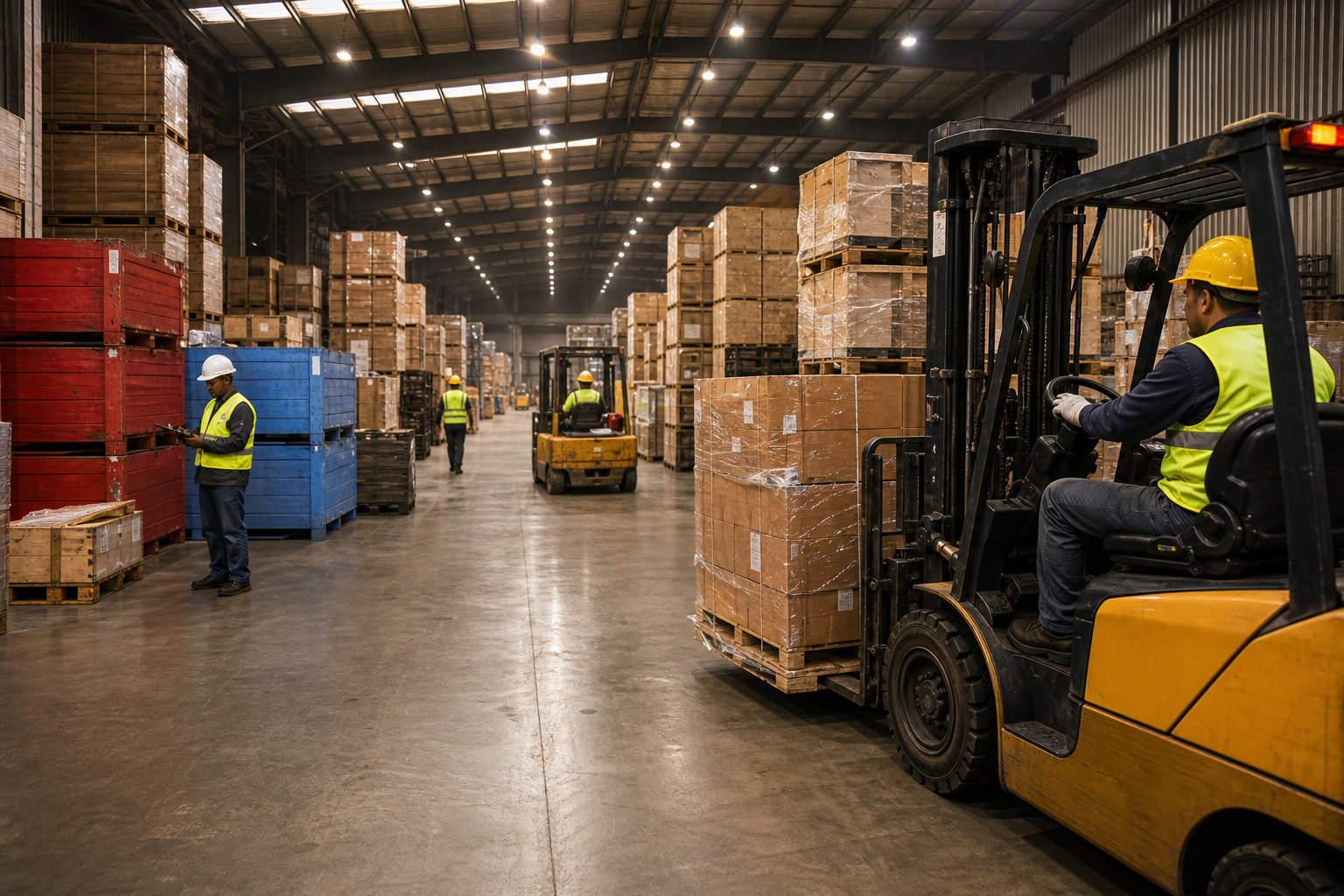
A loading doorway can be one of the largest uncontrolled openings in a facility. Warehouse door heat loss is not only caused by poor insulation. In high-traffic operations, it is often driven by how long the opening remains exposed, how reliably the door closes and seals, and whether the door system suits the work happening at that threshold.
For facilities managing refrigerated stock, conditioned production spaces, pharmaceutical goods, food processing or simply high heating and cooling costs, the doorway needs to be treated as operational infrastructure. A generic industrial door may secure the building after hours, but it may not control air movement, withstand frequent cycles or support efficient traffic during the working day.
Why warehouse door heat loss adds up quickly
Heat moves from warmer areas to cooler ones. During an Australian summer, warm outside air enters an air-conditioned warehouse through an open loading door. In winter, heated internal air escapes through the same opening. At cold rooms and freezer entries, the temperature difference is far greater, making infiltration especially costly and disruptive.
Every forklift movement, pallet transfer and personnel crossing creates an opportunity for conditioned air to escape. The loss is not limited to the air volume at the doorway. Cooling and heating equipment must then work harder to restore set temperatures throughout the adjacent space. This can increase plant run time, raise energy consumption and place pressure on equipment that may already be close to capacity.
In controlled environments, the consequences extend beyond utility bills. Temperature fluctuations can affect product integrity and cold-chain performance. Humid air entering a chilled area can cause condensation, ice build-up and slippery floors. In food production, air movement at poorly designed openings can also undermine hygiene separation between zones.
The main causes of heat loss at warehouse doors
A door can appear substantial while still performing poorly as a thermal barrier. The most common issue is not always the door leaf itself. It is often the complete opening system: the curtain or panels, perimeter seals, floor interface, controls, traffic patterns and installation quality.
Long open times
A well-insulated sectional door offers limited benefit when it stays open for several minutes at a time. Conventional doors can be slow to operate, especially where staff are waiting for a clear path or need to use a separate control point. A door held open for convenience can quickly become a permanent source of energy loss.
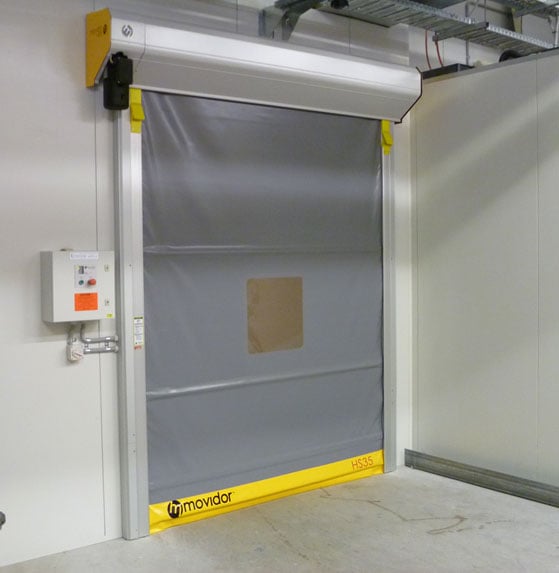
Opening speed matters most where traffic is frequent and the temperature differential is high. Rapid roller doors are designed for high-cycle applications and can reduce the duration of exposure by opening and closing quickly around vehicle and pedestrian movements. The right speed must be balanced with safe operation, clear sight lines and the type of traffic using the doorway.
Gaps, worn seals and poor closing
Even when a door is closed, damaged bottom seals, compressed side seals, misaligned tracks and uneven floors can allow air to pass around the perimeter. These small gaps may seem minor, but a continuously leaking opening can be costly over a full operating year.
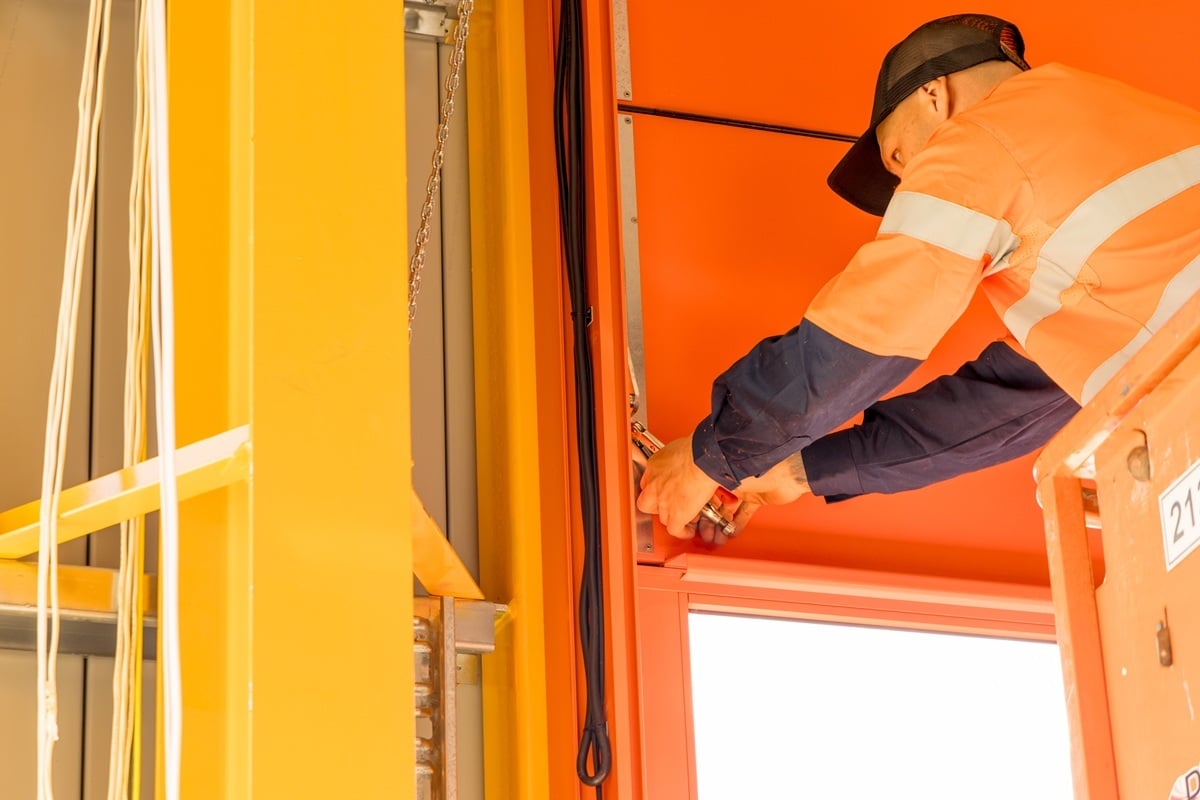
Door damage is common at loading areas. Forklift contact, impact from pallets, building movement and general wear can alter alignment or compromise the seal. A door that still opens and closes is not necessarily performing correctly. Regular inspection should assess its condition as an air barrier, not only as a security device.
Unsuitable door construction
Different openings require different levels of thermal performance. A loading dock connecting an ambient warehouse to the outdoors has different needs from a chilled dispatch room or a temperature-controlled packing area. Insulated sectional doors can provide a strong closed-door barrier where access cycles are moderate. High-speed doors are often better where frequent movement makes open time the dominant issue.
For lower-risk internal transitions, PVC strip curtains may reduce air exchange while allowing continuous movement of people and equipment. They are practical and economical in suitable locations, but they are not a direct replacement for an insulated, sealed door where strict temperature control is required. Strip width, overlap, curtain condition and forklift traffic all affect performance.
Selecting a door system for thermal control
Effective control begins with understanding how the opening is used. Facility managers should assess the temperature on each side, number of daily cycles, opening dimensions, vehicle types, required clearance, hygiene requirements and the consequence of a door being left open or out of service.
A busy dispatch lane may need a rapid roller door with activation sensors that respond to approaching forklifts, close promptly after passage and minimise unnecessary operation. A lower-cycle external opening may be better served by an insulated sectional door with properly engineered seals. Some facilities require a layered arrangement, such as a high-speed door behind an external sectional door, to improve security outside operating hours while controlling temperature during active shifts.
In chilled and hygienic areas, material selection is also relevant. Stainless-steel doors and frames can provide a durable, cleanable solution in washdown and food processing environments. However, thermal performance depends on the complete assembly and interface with the surrounding wall, not just the visible surface material.
Controls should match actual traffic
Door controls have a direct effect on energy performance. A manually operated door or poorly positioned push button can encourage staff to leave an opening open for the next movement. Conversely, an incorrectly configured sensor can trigger too early, hold the door open too long or create unnecessary cycles.
Induction loops, photoelectric sensors, radar and access-control integration should be selected around the real movement pattern. Forklifts, pallet jacks, pedestrians and automated equipment do not all need the same activation method. Separating pedestrian access from vehicle access can further reduce unnecessary opening cycles and improve safety.
The objective is not simply to make a door faster. It is to create predictable movement through the opening while maintaining reliable closing, appropriate safety protection and a clear separation between environments.
Installation details determine real-world performance
The published thermal value of a door panel does not represent the total performance of the installed doorway. Air leakage around frames, inadequate sealing at the floor, poorly formed wall openings and uninsulated interfaces can reduce the benefit of a high-quality door.
Installation should account for the condition of the slab, wall construction, lintel clearance, drainage and the expected impact exposure. At loading docks, the relationship between the door, dock leveller, dock shelter and vehicle position can influence how much outside air enters during loading. Where vehicles must reverse tightly to an opening, protection measures can help prevent repeated damage to door components and seals.
Commissioning also matters. Closing limits, sensor settings, safety devices and seal contact should be tested under normal operating conditions, not just during a handover demonstration. A door that closes correctly on an empty site may behave differently during peak traffic, after a forklift impact or when the floor is wet.
Maintenance is part of managing warehouse door heat loss
A thermal-control strategy can fail gradually. Seals wear, curtains split, door tracks collect debris and repeated impacts affect operation. Because these issues develop over time, they can be missed until energy use rises, temperatures become harder to hold or the door stops operating altogether.
Planned maintenance helps identify deterioration before it affects operations. Checks should include curtain and panel condition, side and bottom seals, fixings, track alignment, drive operation, safety systems and opening and closing speeds. For rapid doors, attention to curtain tension, guide integrity and control settings is particularly important in high-use environments.
Repair response is equally important. A damaged external door can create an immediate energy, security and weather-exposure problem. In refrigerated or hygienic operations, a failed door may also force changes to workflow, restrict dispatch or compromise controlled conditions. Specifying a supplier with installation capability, access to replacement components and ongoing service support reduces this risk.
Remax Doors approaches these openings as engineered systems, combining door selection, installation and lifecycle service for demanding Australian facilities. That perspective is valuable because the best thermal outcome depends on how the complete doorway performs over years of use, not just on its condition on installation day.

A practical way to prioritise improvements
Start with the openings that have the highest traffic volume and largest temperature difference. Observe them during a normal shift. Note how long doors remain open, whether staff bypass controls, where seals show daylight, and whether forklifts or pallets regularly contact the structure.
Then compare the likely cause of loss. A high-cycle internal door may benefit most from faster operation or a strip-curtain barrier. An external door with damaged seals may need repair and adjustment before replacement is considered. A poorly performing cold-room entry may require a more specialised door arrangement, better activation controls and tighter maintenance intervals.
Energy efficiency at the warehouse boundary is rarely achieved by one component alone. When the door, controls, seals, traffic flow and service plan are designed as one system, the opening can support temperature stability without slowing the operation that depends on it.
Not sure which rapid roller door you need?
The right door depends on more than the size of the opening. Our team can help assess your traffic requirements, operating frequency, environmental conditions and what you need the doorway to achieve before recommending the most suitable option for your facility. Request a call with our team.